
Let's talk about the thing nobody names
Self-consciousness isn't a libido problem. It's a brain problem. Your nervous system is treating pleasure like a threat, and no vibrator, no matter how good, can override that signal. A clitoral vibrator like the Lem can't fix shame. What it can do, though, is give you permission to notice shame isn't actually dangerous.
Most people don't struggle with orgasm because they don't know how to use a vibrator. They struggle because somewhere between childhood and now, they learned that their pleasure was embarrassing, inconvenient, or wrong. That lesson lives in your body.
What shame actually does to arousal
When you feel self-conscious, your brain floods with cortisol. That's the stress hormone. Meanwhile, arousal needs parasympathetic activation. Arousal and anxiety cannot exist in the same nervous system at the same time. You can't be turned on while you're worried about being "too loud" or "taking too long" or "being weird."
The irony: the harder you try to override the self-consciousness, the louder it gets. You end up performing pleasure instead of feeling it. Your hips move at the "right" rhythm. Your breathing stays shallow so you don't make noise. Your mind splits into the part doing the thing and the part watching yourself do it, critiquing. That's dissociation wearing a pleasure disguise.
It's exhausting. And it doesn't work.
Why a lemon clitoral vibrator can actually help
Here's the counterintuitive part: using a vibrator when you're self-conscious forces you to choose. Either you stop, or you accept the vulnerability.
When you hold the Lem in your hand, you're not hiding anymore. There's no pretending it's spontaneous or accidental. You're making a deliberate choice to pleasure yourself. That directness is scary. But it's also honest. And honesty is where shame loses its power.
A lemon sexual toy works particularly well for this because it's not subtle. The suction sensation is so distinct, so localized, that you can't stay in your head about it. You have to feel it. Your nervous system can't stay in threat mode when there's actual pleasure happening.
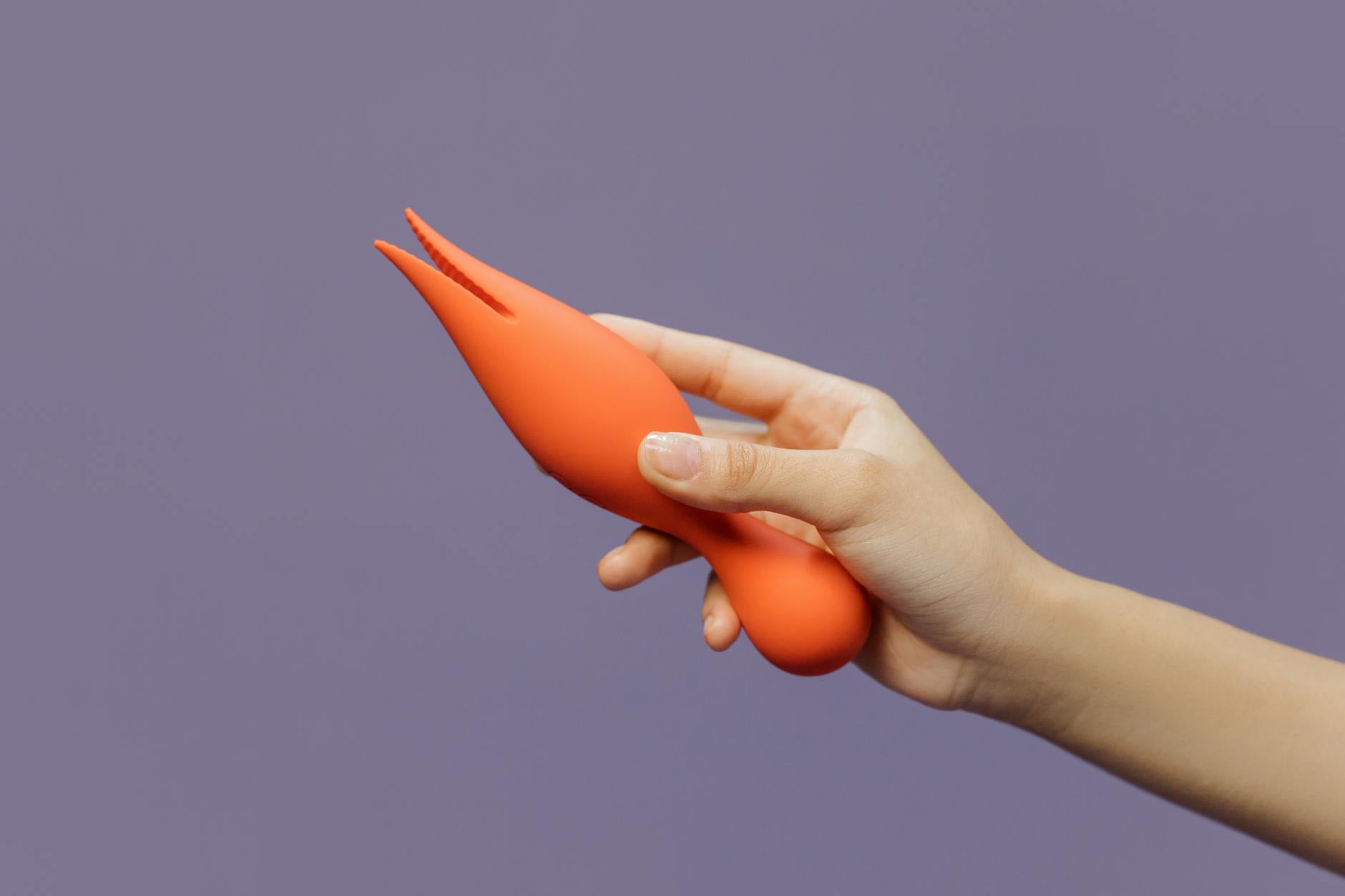
Photo by cottonbro studio on Pexels
The grounding work before you even turn it on
Shame thrives in secrecy and isolation. So start here.
First: tell someone. Not graphic details. Just "I struggle with feeling self-conscious about my own pleasure, and I'm working on that." Say it to a therapist, a trusted friend, a partner. The act of naming it to another human takes away some of its power. Shame hates the light.
Second: get curious instead of judgmental. When self-consciousness shows up, don't fight it. Ask: Where is this coming from? Is this my voice or someone else's? What am I actually afraid of? Write it down if that helps. Most shame stories, when you look at them directly, don't hold up to scrutiny.
Third: get your environment right. If you don't feel safe or alone, your body won't open. Full stop. That might mean a lock on the door, noise-canceling headphones, or waiting until your partner is genuinely asleep. Your nervous system needs to know it's not in danger.
How to actually use a lemon vibrator when shame is present
Start without it on. Just hold it. Get used to the weight in your hand, the texture. This sounds simple, but it's a form of desensitization. You're telling your brain: "This is a normal thing I have. Not forbidden. Not weird. Mine."
When you're ready, turn it on at the lowest setting. Don't place it yet. Just listen to the sound, feel the vibration in your palm. Some people cry at this stage. That's your nervous system releasing old messages. That's fine. That's actually healing.
Now place it. Use lube. Let it sit for a few seconds before you move it around. The initial sensation is often shocking because clitoral vibrators bypass all the foreplay buildup. You go from zero to significant stimulation instantly. That's disorienting when you're already anxious.
When your brain starts narrating ("This is taking too long" or "Am I doing this right?" or "This looks ridiculous"), acknowledge the thought and return to the sensation. Not "push it away." Not "ignore it." Acknowledge it like a notification popping up on your phone. "Oh, there's that thought again." Then look back at what your body is actually feeling. Is the sensation pleasurable or not? Yes? Then that's information. Keep going.
The partner conversation (if applicable)
Self-consciousness often gets worse with a partner, not better. You're suddenly aware of your body, your sounds, your responses. You might be worried they're judging you or getting bored.
If you want to use a lemon adult toy with a partner present, tell them beforehand. Not in the moment. Say something like: "I want to try using the Lem on my own while you're here, but I need to feel comfortable. That means no commentary, no instructions, no pressure. You can be in the room, but I need you quiet." Some partners do better not watching. That's okay too.
The paradox: sometimes pleasure happens faster when you stop performing for someone else and just let them watch you be selfish. You're not doing it for them. You're not doing it to them. You're doing it for you, and they get to witness it. That separation of purpose is powerful.
What happens after shame starts to lift
Once your nervous system realizes that pleasure isn't dangerous, arousal actually gets easier. Your body learns that it's safe to respond. The self-consciousness doesn't disappear, but it stops driving the whole experience.
Many of my clients notice they reach orgasm faster once they've worked through the shame layer, even without any physical changes. The clitoral vibrator becomes a tool, not a threat.
But the real shift isn't about speed. It's about presence. You stop watching yourself. You stop performing. You actually feel what's happening.
When shame is too big to handle alone
If self-consciousness about pleasure connects to trauma, abuse history, or deep religious/cultural shame, a sex therapist or trauma-informed therapist is worth the investment. This isn't something you have to white-knuckle through on your own. Professional help rewires how your nervous system responds to pleasure.
That's not weakness. That's recognizing that some things are too big for willpower and too deep for a blog post.
Your pleasure matters. And you deserve to feel it without the weight of shame inside your body.
FAQs: Self-Consciousness and Pleasure
Is it normal to feel self-conscious about pleasure even when you're alone?
Completely normal. Self-consciousness isn't about other people watching. It's about internalized messages you've absorbed over time. When you're alone, you're watching yourself through the eyes of everyone who ever made you feel ashamed of your body. That critical inner voice is the real audience. Therapy and repeated exposure to your own pleasure gradually quiets that voice.
Can using a lemon clitoral vibrator help me get over shame faster?
It can accelerate the process because it forces directness. You can't accidentally pleasure yourself with something this intentional. But the vibrator is a catalyst, not a cure. The real work is the thinking, the nervous system regulation, and sometimes professional support. The Lem is the witness to your healing, not the healer itself.
What if I feel worse using a vibrator because it makes the shame louder?
That's actually useful data. It means your nervous system is activated, which is where change happens. Stay with it for a moment. Don't panic and stop. Notice: Am I in actual danger? No. Am I uncomfortable? Yes. Can I be uncomfortable without believing the uncomfortable feeling means something is wrong? That's the whole practice. If it becomes unbearable, stop and seek support from a therapist who specializes in sexual shame.
How do I stop thinking about what my body looks like while I'm trying to feel pleasure?
You probably can't stop the thoughts. They'll keep coming. The goal isn't to eliminate them. It's to stop following them down the rabbit hole. When you notice "my body looks weird from this angle," acknowledge it and ask: Is my body safe right now? Is it feeling something good? If yes to both, that thought is information, not truth. Return your attention to sensation. Do this fifty times if you need to. Your brain will eventually get quieter.
Is it okay to use a lemon sexual toy differently if you feel embarrassed about the "normal" way?
Absolutely. There is no normal way. If you want to use it clothed, or through fabric, or with the lights off, or while listening to a podcast, that's fine. Meet yourself where you are. The goal is to interrupt the shame pattern, not to perform some "correct" version of pleasure. Start with whatever feels least triggering, and expand from there as your nervous system regulates.
What if my partner makes me feel more self-conscious, not less?
That's a relationship issue that a lemon vibrator can't fix. If a partner makes you feel ashamed of your pleasure, that's information about the relationship dynamic. You might need a conversation with them, or you might need to work through mismatched pleasure timelines with a professional. Sometimes the self-consciousness isn't shame you're carrying. It's a response to not being safe with the person you're with.
The bottom line
Self-consciousness kills arousal because it keeps your nervous system in threat mode. A clitoral vibrator gives you direct evidence that pleasure is real and safe. You can feel it. Your body responds. Nothing bad happens. That repetition, over time, rewires the neural pathways that associate your pleasure with danger or shame.
The work isn't about technique. It's about permission. Every time you use the Lem despite the self-consciousness, you're telling that critical inner voice: "I'm doing this anyway. And I'm not sorry." That's how healing happens.