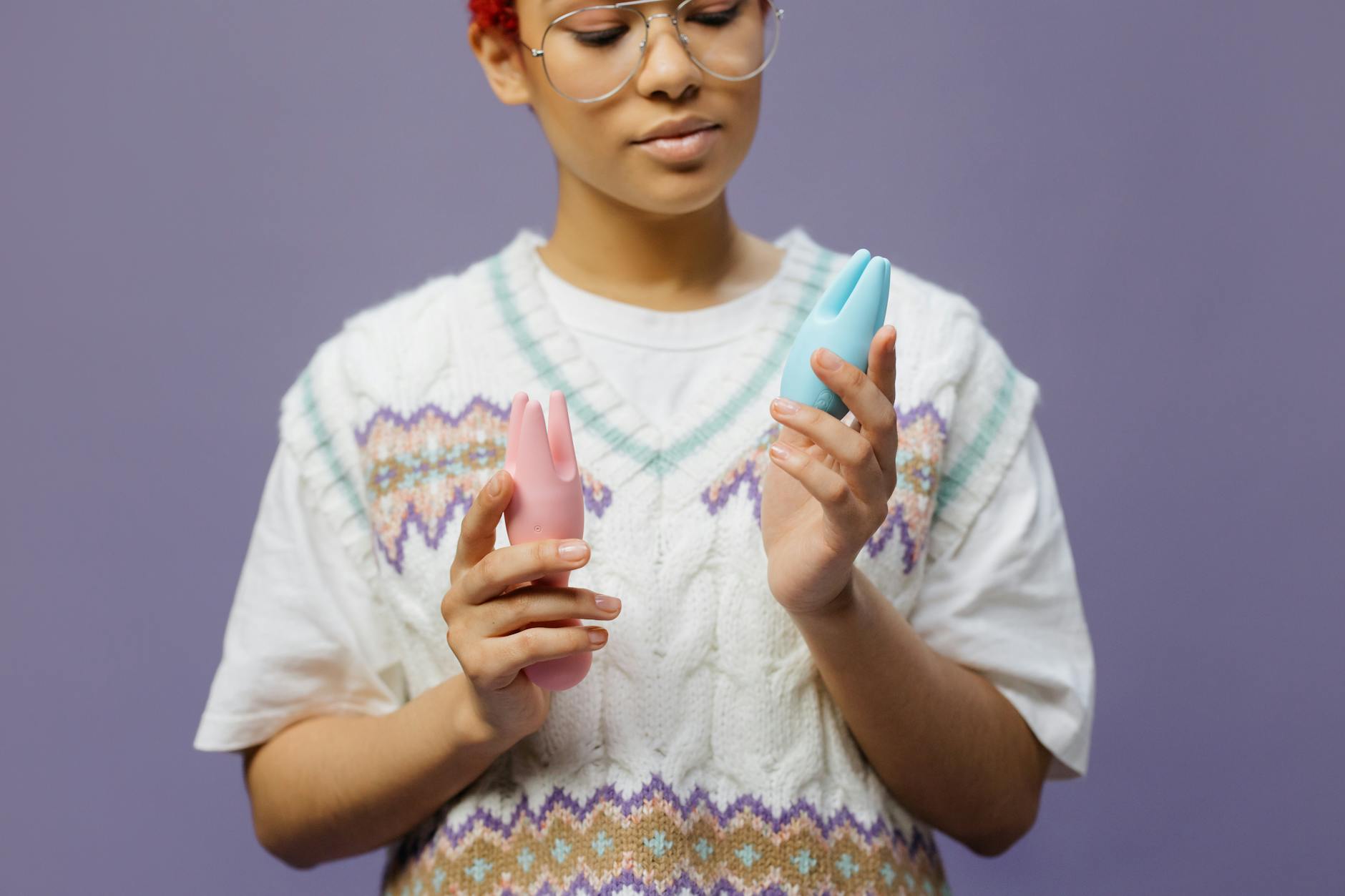
Here's the thing about introducing a vibrator to partnered sex
It's not about replacing anything. It's about adding something that works for both of you.
Most couples I work with hesitate here because they're confusing two separate fears. One partner worries the vibrator means "I'm not enough." The other worries introducing it will create awkwardness or rejection. Both fears are real. Neither is actually about the lemon vibrator itself.
Why a lemon clitoral vibrator changes the math on partnered pleasure
Let me be direct: many people with vulvas cannot orgasm from penetration alone. The stats range from 65 to 90 percent depending on the study, but the bottom line is consistent. This isn't a personal failure. It's anatomy. The clitoris is where the nerve endings cluster, and a lemon vibrator gives you direct, consistent access to that area in a way a partner's fingers often can't match.
When you introduce a lemon sucker vibrator or other clitoral vibrator during sex, you're not saying "your body doesn't work." You're saying "let's both get what we need from this."
Here's what actually happens physiologically. A lemon clitoral vibrator delivers rapid, precise stimulation that builds arousal and orgasm capacity faster than manual stimulation alone. When both partners are focused on reaching climax at roughly the same time, a vibrator compresses the timeline and syncs the experience. This matters because asynchronous orgasms are one of the top sources of disconnect in partnered sex. The vibrator solves that problem.
The conversation you need to have first
Timing is everything. Don't introduce the vibrator mid-session when your partner is already vulnerable or in the moment. Have the conversation fully clothed, outside the bedroom, with tea or coffee in hand.
Start with curiosity, not defense. "I've been thinking about this and I'd like to talk about it" is stronger than "I need this because you're not doing X." The second one creates a problem to solve. The first one creates an adventure to take together.
Use the word "we." Not "I want to use a vibrator" but "I think we could both enjoy this together." Language matters because it signals collaboration instead of substitution.
Answer the unspoken question first. Your partner is likely wondering: will this replace you, will I feel inadequate, will this become a need instead of a preference? Address it head-on. "I'm not replacing anything. I'm adding something that lets me get there more reliably, which means we both finish closer together and that feels better for both of us."
If your partner resists, ask what the actual concern is. Dig into it. Defensiveness usually signals fear, not disagreement. Fear is workable. Ask what would make them feel safe and included. Some partners want to control the vibrator. Some want to be present but not in control. Some want to watch and learn what you like. Honor the boundary while gently expanding it.
Positioning and integration: how to actually use it
The shape of a lemon vibrator is your advantage here. The compact, curved design works in ways traditional vibrators don't.
If you're on top (any genital configuration), hold the vibrator against your clitoris while your partner enters. The positioning leaves their hands free, which often feels less crowded than a longer toy would. You control the pressure and angle. Your partner can focus on depth, speed, and their own sensation. This configuration feels collaborative, not like they're watching you use a toy.
If you're underneath, position the vibrator between you. This is where the design of a lemon clitoral vibrator really shines. It's small enough that it doesn't create a barrier; you're still close, still touching. Your partner can use the base of the vibrator against your body, which gives them something to hold onto and creates a stability point. You're not fumbling with angles.
If you're side-by-side, the vibrator sits naturally in the space between you. Less motion, more sustained pressure. This is ideal if you want slower, more intimate timing.
For entry-from-behind positioning, use the vibrator on your clitoris while your partner enters from behind. The angle puts your hands naturally in front of your body, and your partner has clear access to your back and shoulders, which creates more contact points than front-facing positions do.
The pattern you choose matters. Lemon vibrator sensitivity settings range from gentle pulses to intense sustained vibration. Start at pattern 1 or 2 during partnered sex. Yes, lower than you might use alone. Partnered stimulation (their movement, your mental state) compounds the sensation. You'll reach climax faster. This is intentional. The goal is synchronized pleasure, not maximum intensity.
Making it feel natural, not clinical
Incorporate it into foreplay, not as the finale.
Introduce the vibrator before penetration. Use it for 5 to 10 minutes during foreplay while you both touch, kiss, and stay close. This normalizes it. It becomes part of the warm-up, not a last-ditch solution. Your partner learns what your arousal actually looks like when you're being stimulated in the way that works best for you. This is valuable information they can use later.
Talk during sex. Not clinical commentary. Just honesty. "That feels good." "A little slower." "More pressure." Your partner learns your body faster with a vibrator than without one because the feedback is clearer. When they can see exactly which pattern and pressure creates the response, they understand your physiology better.
Let your partner hold it sometimes. This creates a sense of shared control and participation. It's not "you use this while I wait." It's "we're doing this together."
Don't make it a crutch for conversation. If you start using the vibrator every single time because neither of you wants to address the real disconnect between you, you've got a different problem. The vibrator won't fix emotional distance. It will just give you better sex while you're still emotionally separate. Use it as an enhancement, not a band-aid.
When you're nervous they'll judge you
Your partner's reaction usually says more about their own insecurity than about the vibrator.
If they see the vibrator as a threat, that's worth exploring. Not because you're wrong to want it, but because it signals something deeper about how safe they feel in the relationship. A secure partner is curious about their partner's pleasure. An insecure one feels like it's a referendum on their adequacy.
You can be compassionate and firm at the same time. "I understand this feels uncomfortable. I also know this is what works for my body, and my pleasure matters. Can we figure out how to do this together?" You're not negotiating away your needs. You're inviting them to understand them.
If they refuse, that's information too. It might mean they need time. It might mean they need to talk to someone about where the fear comes from. It might mean you're incompatible. All three are worth knowing.
The practical stuff nobody talks about
Wipe the vibrator before and after use. A splash of water and a quick dry prevents bacteria buildup.
Battery life matters. The last thing you want is for the vibrator to die mid-moment. Charge it fully before any session. If you're using it intensely, charge it between sessions.
Lube helps. Even if you don't need it for penetration, a tiny amount around the clitoris before the vibrator touches down makes the sensation glide instead of buzz. This is especially true if you've got sensitive tissue or if this is early in the partnership.
Start with the lowest setting and work up. Your body and your partner's experience change as arousal builds. A setting that felt perfect at minute 3 might feel intense at minute 8. Give yourself room to adjust without stopping.
The sex after will probably be better than the sex before
Let me be clear: using a vibrator during partnered sex doesn't make you any less capable of pleasure without one.
What it does is give you reliable access to what works. When you know you can reach orgasm with a lemon clitoral vibrator, you relax. That relaxation is the gateway to better sensation across the board. Tension holds pleasure back. The more you trust your body and the tools you're using, the more you feel.
Your partner, watching you come reliably and enthusiastically, becomes more confident too. Pleasure is contagious. The more they see that you're getting what you need, the more permission they give themselves to enjoy it too.
That's the math. The vibrator isn't the point. It's the vehicle.
People also ask
Will my partner feel like they're doing something wrong if I use a vibrator during sex?
Not if you frame it correctly. A vibrator isn't commentary on their technique. It's a tool that works with their contribution, not against it. The key is the conversation before, not the vibrator during. When they understand that a lemon vibrator lets you reach orgasm during partnered sex in a way that feels better for both of you, the frame shifts from "you're not enough" to "this works for us."
Can I use a lemon sucker vibrator if I have a sensitive clitoris?
Yes, but start conservatively. The suction design of a lemon vibrator is actually gentler than traditional vibrators for sensitive tissue because it stimulates nerves without the harsh direct friction. Start at the lowest setting and let your body adjust. You can always increase intensity; you can't take back overstimulation.
What if I want to orgasm but my partner finishes quickly?
A vibrator is directly for this. Many partners feel pressure to "last long enough" when they don't know their partner's baseline. When you use a vibrator during partnered sex, you're both working toward the same timeline. Your partner stops feeling like they need to hold back or perform endurance. You reach climax faster. Everyone's happier. Start using the vibrator early in the session so you're not racing against their natural rhythm.
Is it weird to use a clitoral vibrator during intercourse?
Not at all. In fact, it's increasingly standard. Many couples integrate clitoral stimulation during penetration because it works. That said, if you're nervous about how it will feel, start in a position where you can see each other's faces. Intimacy reduces weirdness faster than anything else.
How do I know if my partner is actually okay with it or just going along with it?
Ask directly and watch for genuine curiosity. If your partner asks questions, wants to hold it, wants to know how it feels, they're genuinely interested. If they tolerate it silently and seem relieved when it's over, they're going along with it. That's a different conversation to have. Don't mistake acceptance for enthusiasm. You want both.
Can I use a lemon vibrator during partnered sex if we haven't established what positions work for us yet?
Absolutely. In fact, a vibrator can help you figure out positioning faster. When you're both getting clear feedback about what feels good, you learn the landscape quicker. You'll discover new favorite positions because you're not locked into the narrow range that produces orgasm without assistance.
What comes next
Use the vibrator. Have the conversation. Let it be easy. Your pleasure matters, and when both partners are on the same page about that, everything else gets simpler.
If you need help navigating the communication or the logistics, or if there's tension in the partnership that's making this conversation harder, reach out. That's what I'm here for.
Your body knows what it needs. Trust that. Your partner can learn to trust it too.