Let's talk about what nobody tells you about empty nest
When your kids move out, something shifts. The house gets quieter. Your calendar suddenly has blank spaces. And something else wakes up too, whether you expected it or not. Some of my clients describe it as grief mixed with liberation. Others just say they feel like themselves again for the first time in twenty years.
What they're often surprised by is this: rediscovering their own pleasure becomes urgent and surprisingly urgent. Not as a couple thing, but as a solo thing. A conversation I have regularly is "I don't even know how to touch myself anymore. I've been so focused on everyone else's needs that I've forgotten my own body."
That's where this guide comes in.
Why solo pleasure matters more now than it ever did
Here's something clinically important that sounds obvious once you say it aloud: you can't give pleasure to a partner if you don't know what pleasure feels like to you. For twenty years, you may have approached sex as something that happens with someone else, often with their timeline and preferences shaping the experience.
Now there's just you. And honestly, that's a gift.
Solo pleasure serves three functions at this stage of life. First, it reconnects you to your own body and your own capacity for sensation. Second, it rebuilds the neurological pathways for desire that may have gone quiet during the busiest parenting years. Third, if you're partnered, knowing your own pleasure makes partnered sex better because you know what actually works for you.
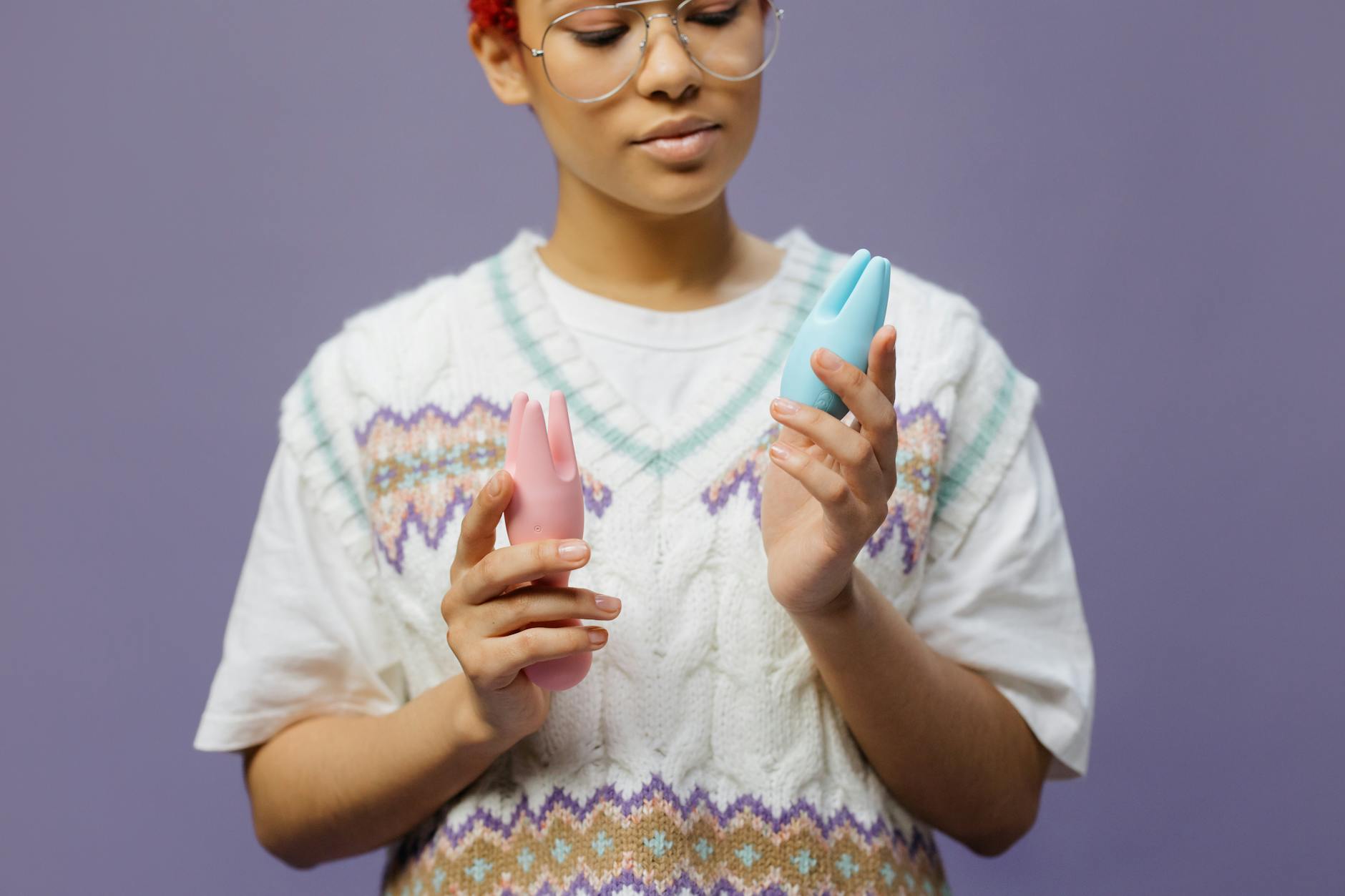
A lemon clitoral vibrator, specifically one that works through suction rather than direct vibration, is particularly well-suited to this rediscovery because it tends to feel gentler, more intentional, and less "clinical" than traditional vibrators. Many people find the sensation closer to manual stimulation, which makes it feel more connected and less like you're using a gadget.
Setting up space and time that's actually yours
This might sound basic, but it's the thing people skip and then struggle with. You need three things: privacy, time, and permission.
Privacy means knowing you won't be interrupted. If you live alone, that's easy. If you're partnered, it means having a conversation. Something like, "I'm carving out time for myself once a week on Sunday afternoons. I'd love to know you won't need me during that window." That's not hiding. That's being clear about boundaries.
Time means actually blocking it. Not "whenever I feel like it," which becomes never. Put it on your calendar. Start with thirty minutes. Make it regular. Your brain needs to know it's coming.
Permission is the internal work. You need to decide that your pleasure is worth the time, the space, and the attention. For people who've spent two decades putting everyone else first, this often feels selfish at first. It's not. It's maintenance. It's the same as exercise or sleep, except it also feels good.
How to actually start
Begin with exploration, not goal-orientation. The goal isn't orgasm. The goal is sensation.
Start in a comfortable position. Lying down works. Sitting works. Whatever doesn't leave your arm tense. You want to be able to focus on what you're feeling, not on whether you're uncomfortable.
Before using any toy, spend five to ten minutes with your hands. Touch your breasts, your belly, your inner thighs, your vulva. Notice where you want to be touched. Notice where sensation feels good versus neutral versus uncomfortable. This isn't foreplay in the traditional sense. It's reconnaissance.
When you introduce a lemon sucker or lemon vibrator, start on the lowest setting. The sensation of suction is different from vibration, and some people need a moment to adjust to it. The first time, you're not trying to get anywhere. You're just noticing.
Building a routine that sticks
Solo pleasure isn't a one-time thing. It's a practice. And like any practice, it works better with structure.
I recommend starting with once a week, same day, same time. Your brain learns to expect it. Your body starts to anticipate it. After a few weeks, the neurological pathway gets stronger and desire becomes easier to access. Some weeks you'll use your lemon clitoral vibrator and find orgasm easily. Other weeks it'll take longer or feel different. That's completely normal and completely fine.
Keep your vibrator somewhere you can access it without fanfare. Not hidden in a box, not in a drawer under winter sweaters. Accessible. That removes friction and shame and makes the habit stick.
Here's something people don't talk about: solo pleasure often feels different when you've been in a long relationship. You might be used to orgasms that happen because of interaction or performance. Solo orgasms might feel smaller, quieter, more internal. They might also feel more intense because they're entirely on your timeline. Both are valid.
The unexpected emotional dimension
Physical pleasure and emotional pleasure are connected. When you create space for solo intimacy, you're also creating space for a relationship with yourself. That's worth acknowledging.
Some of my clients find that solo pleasure time helps them process stress, grief, or transition that they haven't had space for. The quiet, the focus on sensation, the permission to feel good. It all adds up to something that looks like physical pleasure but also functions like emotional self-care.
Others find that it gives them back a sense of agency they'd lost. For twenty years, they've been accommodating someone else's schedule, someone else's preferences, someone else's needs. Solo pleasure is entirely theirs.
That's not small. Honor it.
When you're ready to involve a partner
If you're in a relationship, knowing your own pleasure becomes a conversation. Not a performance. A conversation.
Something like: "I've started exploring solo pleasure time, and it's helped me understand what I actually enjoy. Some of it, I'd like to share with you." You can show your partner what you've learned. You can use your lemon vibrator together. You can let them see what makes your body respond.
That's radically different from expecting them to intuitively know what you want. It's informed. It's collaborative. And almost always, it makes partnered sex better because now both of you know what actually works.
Practical logistics that people forget about
Your lemon sexual toy needs care. Wash it with warm soapy water before and after use. Keep it charged. Silicone is durable and easy to maintain, but treat it with basic respect.
Use water-based lubricant if you want it. You don't need it, but many people find a little extra glide makes the sensation even better. Keep lube near where you'll be using your vibrator. No reaching across the room mid-moment.
If you're trying a lemon clitoral vibrator for the first time, give yourself three or four sessions before you decide if it's working for you. Your body and brain need time to adjust to new sensation. What feels strange on day one might feel amazing on day four.
People also ask
Is it normal to feel awkward using a lemon vibrator alone after years of not exploring?
Completely normal. You're learning a new habit and creating space for yourself after a long time of not having that space. Awkwardness usually fades after two or three sessions once your body realizes it's safe and you're not going to be interrupted. The ritual becomes less awkward as it becomes routine.
How long does it take to rebuild desire after years of focused parenting?
It varies widely, but most of my clients notice a shift within two to three weeks of regular solo pleasure time. That's about how long it takes for your nervous system to register that this is safe, predictable space. Some people feel desire returning almost immediately. Others take a few months. Both timelines are fine.
Can you use a lemon sucker if you have a low libido after menopause?
Absolutely. In fact, many people find that the gentleness of suction-based stimulation works better after hormonal shifts than traditional vibration. The key is patience and no goal-orientation. You're rebuilding neural pathways, not chasing an outcome. That process takes time and feels better when there's zero pressure.
What if you don't orgasm the first few times?
Then you don't orgasm the first few times. That's fine. You're still building the habit, still exploring sensation, still reclaiming your body. Orgasm will come or it won't, and either way, the practice is valuable. Some people find that removing the goal of orgasm actually makes orgasm easier to access because you're not performing for yourself.
Is solo pleasure routine normal at this life stage?
Yes. Increasingly normal. Many of my clients describe rediscovering solo pleasure after kids leave as one of the gifts of that transition. It's not a replacement for partnered sex. It's a separate practice that often makes everything else better.
How do you talk to a partner about solo pleasure time without it feeling like rejection?
Framing matters. "I'm rebuilding a relationship with my own body and my own pleasure" is different from "I don't want you anymore." It's about you, not about them. Most partners who care about you will understand that time for yourself makes you happier and more present. If they don't, that's a different conversation worth having with someone like me.
Empty nest is a transition. Your sexuality is part of that transition. Giving yourself permission to explore it, solo and on your own terms, is one of the kindest things you can do for yourself right now. Your body has been here the whole time. Maybe it's just time to come back home to it.