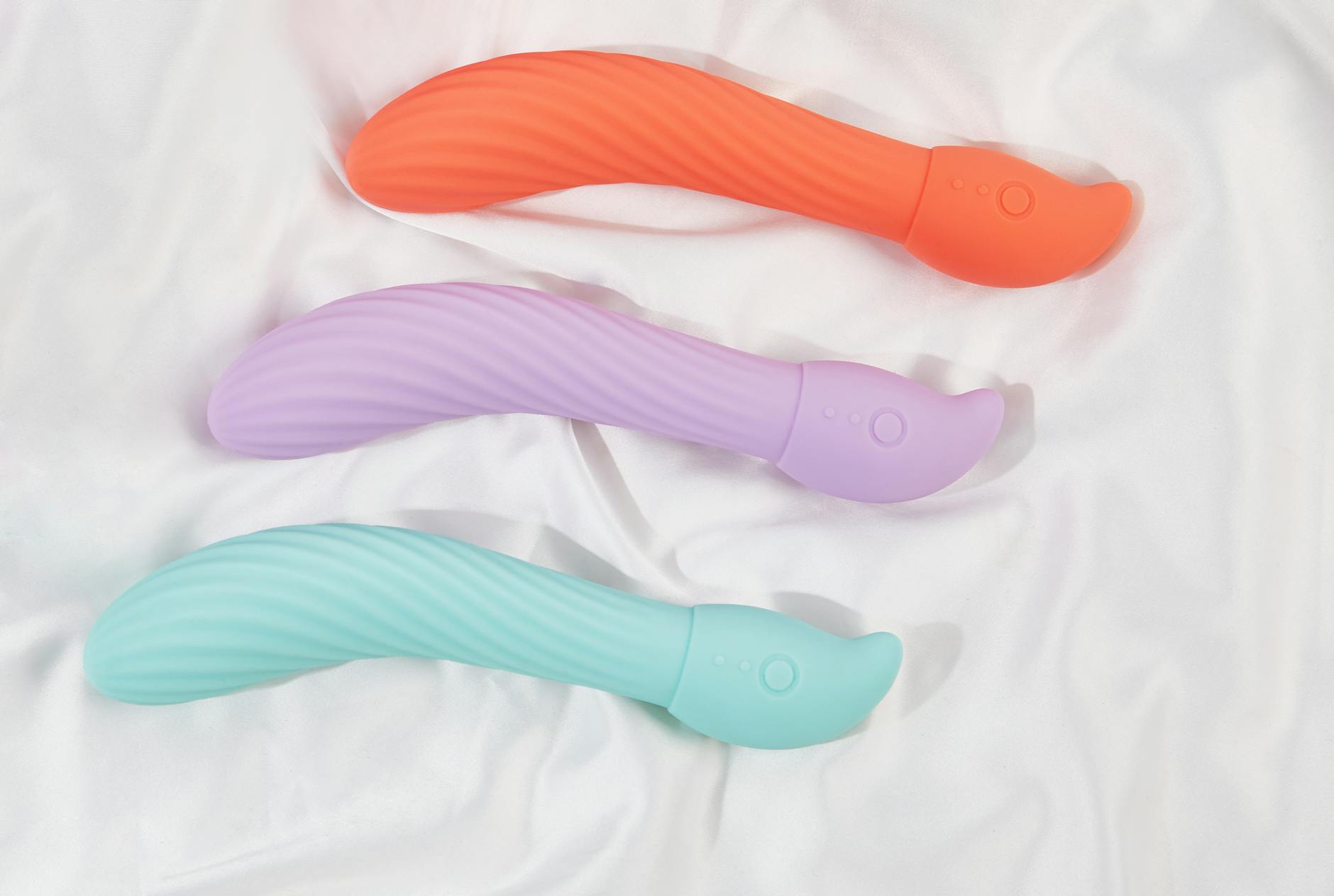
Here's what nobody tells you about your clitoris
Your clitoris is not a constant. It changes sensitivity throughout your arousal cycle. Early on, you might barely feel anything at medium settings. By the time you're close, that same pattern feels overwhelming. This is completely normal physiology, not a flaw in the toy or your body.
The problem isn't your lemon vibrator. It's not having a strategy for riding that sensitivity wave without stopping to fumble with controls.
How arousal actually changes clitoral sensation
When you first touch yourself or your partner touches you, blood flow to the clitoris is low. The tissue is less engorged, less reactive. You could use a higher pattern and barely register it. As arousal builds over minutes, the clitoris swells with blood. More engorgement means more nerve sensitivity. That same pattern suddenly feels intense.
This happens to everyone with a clitoris. The timeline varies (anywhere from 5 to 25 minutes to reach peak sensitivity), and the degree of change varies, but the direction is consistent. You start needing more input. You end needing less.
There's also a second factor: your nervous system itself gets more reactive. Early arousal activates the parasympathetic nervous system gently. Deeper arousal shifts toward heightened sympathetic activation. Sensation gets sharper, faster, more insistent.
Why your lemon vibrator is actually perfect for this
The lemon clitoral vibrator's suction mechanism works differently than traditional vibration. Instead of oscillating back and forth, it creates a gentle pulling sensation that most people find easier to control in intensity. The key is that you can move between patterns without breaking rhythm.
Unlike a standard vibrator where jumping from pattern 2 to pattern 5 creates a jarring sensation change, the Lem's air-pulse patterns have gentler transitions. You can experiment with moving up one pattern every 2-3 minutes as you warm up, or you can ease into slightly faster patterns in the same pattern family without starting over.
This gradual pacing is the difference between an orgasm that feels natural and one where you're white-knuckling the controls.
The warm-up phase: starting low and knowing you'll climb
Begin at pattern 1 or 2. This sounds obvious, but most people start too high because they're impatient or because they remember needing intensity from last time. You're not last time. You're just starting.
Spend at least 5 minutes here. Let your clitoris wake up. Your body will signal readiness when you notice your breathing changing, when you start to engage your pelvic floor involuntarily, when the area feels heavier or more present.
The goal of this phase isn't pleasure. It's wakefulness. Treat it like warming up before exercise.
The mid-arousal phase: steady climbing
After 5-7 minutes, move to pattern 3 or 4. Notice how it feels compared to where you started. If it feels about right, stay there for another 3-5 minutes. If it already feels like too much, lower back to 2 and give yourself more time.
Timing matters. If you jump patterns every 30 seconds because you're impatient, you'll miss the window where medium intensity actually feels amazing. Your clitoris needs time to adjust to each level before you ask for more.
This is also where you might <a href="/blog/lemon-vibrator-intensity-levels-finding-your-comfort-zone">experiment with repositioning slightly</a>. The clitoral glans (the visible tip) is more sensitive than the clitoral hood. For mid-arousal, some people find it helpful to apply the lemon vibrator directly to the glans for a few pulses, then move slightly upward to the hood, alternating as intensity increases. You control this by adjusting your hand position, not the toy.
The high-arousal phase: gentle increases or holding steady
As you get closer to orgasm, your sensitivity peaks around minute 15-20 (again, timelines vary wildly). This is where most people make a tactical error: they assume they need more intensity.
Often, what you actually need is refinement. You might move from pattern 4 to pattern 5 if you started at a conservative level, but you might also hold pattern 3 and shift where you're applying the toy. Some people find that moving the stimulation slightly off-center as sensitivity peaks creates a new sensation that feels just right without adding raw intensity.
If you do increase the pattern now, increase by one level only. The difference between patterns 5 and 6 feels much larger at peak arousal than it did at the beginning.
How to pace without losing focus
Here's the tactical part: set a gentle phone timer or use the pattern changes as your guide. Each pattern lasts 2-3 minutes before you consider moving up. This takes the thinking out of it. You don't have to monitor your own arousal level and make a decision. You just feel the pattern you're on, and when the timer nudges, you check in with your body. "Does this still feel good? Am I ready for the next level?"
Most people find that following this rhythm of move-every-3-minutes gets them to orgasm in a more integrated way. Your body and the toy stay in conversation instead of you chasing sensation.
What happens if you misjudge and go too high
You won't damage anything. But you'll lose the approach to orgasm and have to recover. If the intensity suddenly feels wrong, lower the pattern immediately. Don't push through hoping you'll adjust. Your nervous system will only tense up more, which kills arousal.
Take a breath. Move back to the pattern that felt right 2 minutes ago. Often, taking 30 seconds to recalibrate lets your clitoris reset, and you can climb again more slowly.
The plateau phase: subtle shifts matter more than intensity jumps
Some people notice that their arousal plateaus before orgasm. You feel close, but nothing's tipping over. This is normal. And usually, intensity isn't the answer.
Try staying on the same pattern but changing your breathing. Deeper, fuller breaths often unlock something. Or pause the lemon vibrator for 10-15 seconds, let the sensation soften, then resume. The return of sensation sometimes triggers the response you're looking for.
Alternatively, if you've been stimulating the glans, shift to the hood or the area just above. New nerve endings firing sometimes creates the sensation you need.
After orgasm: sensitivity spikes further
Here's something worth knowing: many people find that immediately after one orgasm, the clitoris is hypersensitive. If you want to go again, you might need to reduce the pattern by one or two levels and take a couple of minutes before building back up. Or you might prefer to rest.
There's no rule. But if you're going multiple rounds, understanding that sensitivity doesn't decrease smoothly helps you avoid the frustration of "why does this hurt now when it felt amazing 20 seconds ago."
Solo versus partnered: the difference in pacing
When you're using a lemon vibrator solo, you control the entire rhythm. You set the pace, you make the changes, you listen to your body. The trade-off is that you're also doing the work of attention.
With a partner, they can handle the toy while you focus on sensation. But they can't feel what you're feeling. Communication becomes essential. "Warmer, warmer, hold it here" is better than silence. If a partner is adjusting patterns for you, you might want to agree on the timing beforehand: "Let's move up every few minutes" removes the guesswork.
Practical tips for three common situations
If you warm up very quickly (reaching peak sensitivity in under 10 minutes). You might use patterns 1-2 for a shorter window and spend more time in patterns 3-5. Your sensitivity climb is steeper than average. Honor that instead of forcing yourself to linger at low intensities that bore you.
If you warm up slowly (needing 15-20 minutes to reach peak sensitivity). Don't assume something's wrong. You might have lower initial clitoral engorgement, or you might just need longer foreplay. The solution is patience, not pressure. Use those early minutes to enjoy the sensation building, not to rush it.
If your sensitivity feels wildly unpredictable. Hormones, stress, medication, sleep, and hydration all affect clitoral sensitivity. On days when you feel less reactive, you're not broken. You might need to start a half-level higher and give yourself more time overall. Some days you hit peak arousal at pattern 4. Some days it's pattern 6. Both are normal.
How to practice without pressure
Familiarize yourself with the patterns in a low-stakes moment. Try each one for 30 seconds. Notice the feel of pattern 1 versus pattern 3 versus pattern 5. This takes five minutes total and gives you a reference point. When you're actually aroused, you won't have to guess what comes next.
Second, the next few times you use your lemon vibrator, pay attention to the timeline. How long until you feel the arousal shift? When does intensity start to feel like too much? What pattern felt best right before orgasm? You're building a map of your own body, not memorizing a template.
When to see a professional
If your clitoral sensitivity feels painful at any arousal level, or if it suddenly changes (e.g., you've never had pain but now medium patterns hurt), that's worth mentioning to a gynecologist. Usually it's nothing serious. But nerve sensitivity can shift with hormones, medication, or inflammation. Getting checked rules out anything treatable.
If you're feeling disconnected from sensation altogether, that's a different conversation. You might find <a href="/blog/how-to-use-lemon-vibrator-when-you-feel-disconnected-from-your-body">building sensation awareness more helpful</a> than chasing intensity.
The bottom line
Your clitoris changing sensitivity as you warm up isn't a problem. It's the design. Your lemon vibrator's multiple patterns exist precisely so you can match them to your body's changing needs. The rhythm that works is the one where you spend 2-3 minutes at each level, paying attention to what your body's telling you, and moving up when it feels natural to do so.
Most people find that this pacing—slow, attentive, responsive—leads to more reliable, deeper orgasms than chasing intensity the whole time. Your pleasure works better when you're working with your body instead of against it.
People also ask
Can you feel a lemon vibrator through thick tissue or calluses on the clitoris?
Yes, though sometimes with less initial sensation than on more delicate tissue. The clitoral glans has distinct nerve pathways, so the suction mechanism of a lemon vibrator usually cuts through even when surface tissue feels less sensitive. If direct stimulation feels muted, try gentle pressure around the clitoral area (the external clitoral body) where sensation often remains sharp. After a few sessions, the tissue often becomes more responsive as blood flow increases.
What if the lowest pattern on your lemon vibrator is still too intense during warm-up?
You have options. Use the toy through a thin cloth barrier (like a silk scarf) for the first 5 minutes, then remove it. Or run the vibrator for just 5-10 seconds at a time during warm-up, letting your clitoris rest between pulses. Some people place their hand between the toy and their body to diffuse intensity. The point isn't to fight the sensation. It's to introduce it gradually so your body can catch up.
Does the time it takes to reach peak sensitivity change throughout your menstrual cycle?
Yes, noticeably. Around ovulation (day 14 of a typical cycle), you often reach peak sensitivity faster because estrogen levels are high. During your period or the luteal phase, it might take longer because hormone levels are lower. Understanding your personal cycle helps you adjust your expectations. What takes 8 minutes mid-cycle might take 15 minutes during your period. Neither is wrong.
Should you tell a partner when you're reaching peak sensitivity, or let them figure it out?
Tell them. Most partners aren't telepaths, and they're not going to hurt your feelings by accidentally using too much intensity. A simple signal like "softer" or "hold here" gives them actionable feedback. If you want them to match your rhythm, you could agree beforehand that you'll say pattern numbers ("stay on 3") or use a simple scale ("gentle, medium, more"). Clarity in the moment prevents awkwardness and keeps sensation going.
Can using a lemon vibrator change your sensitivity over time?
It can. Regular use of air-pulse toys often makes people more responsive to suction generally. Some people notice they become more sensitive to pattern variations—what felt subtle a month ago now feels distinct. Others find their baseline arousal time shortens slightly. If you're tracking your pleasure patterns, you'll probably notice these shifts. They're usually positive, but if you feel like your sensitivity is decreasing, that might signal you need to take a break from the toy for a week or two.
What's the difference between clitoral sensitivity and clitoral pain during arousal?
Sensitivity is the pleasant experience of nerves firing. Pain is sharp, burning, or aching discomfort. If medium or high patterns feel intense but good, that's sensitivity. If they sting or feel raw, that's pain and worth addressing. Pain sometimes signals irritation, insufficient lubrication, or a skin condition. Taking a break, using a thin barrier, or consulting a gynecologist is the right move.
References
Basson, R. (2000). The female sexual response: A different model. "Journal of Sex & Marital Therapy," 26(1), 51-65. Key research on arousal phases and sensitivity changes.
Meston, C. M., & Frohlich, P. F. (2000). The neurobiology of sexual function. "Archives of General Psychiatry," 57(11), 1012-1030. Physiological basis for sensitivity variation.
Oliver, M. B., & Hyde, J. S. (1993). Gender differences in sexuality: Results from meta-analysis. "Psychological Bulletin," 114(1), 29-51. Evidence on individual variation in arousal patterns.
Berman, L. (2003). The passion prescription: Ten weeks to your best sex ever. "Hyperion." Clinical framework for responsive pleasure and pacing.