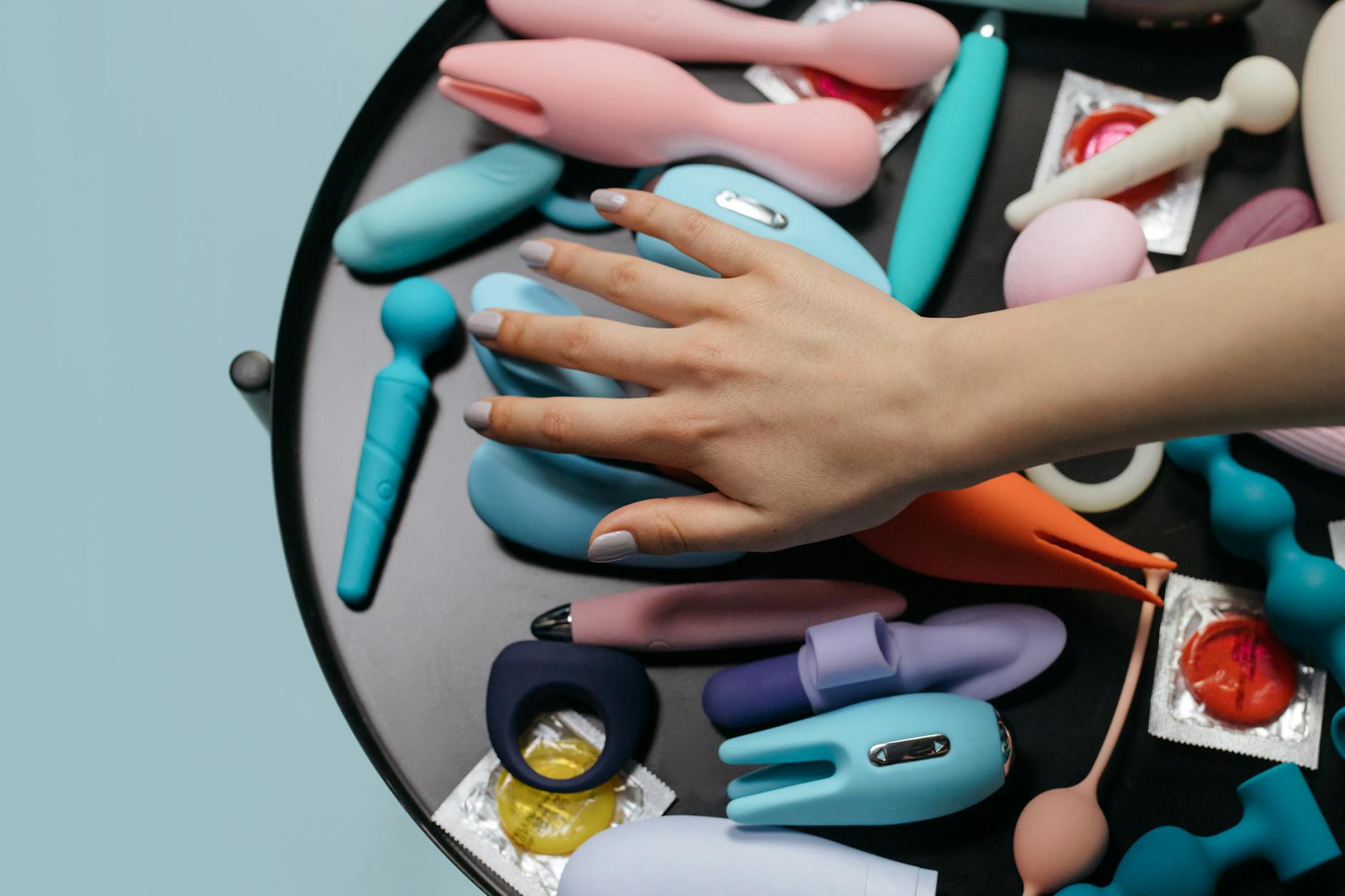
Here's the thing about toys and new relationships
You're not supposed to talk about this part. Most advice on new relationships focuses on when to sleep together, what that means, how vulnerable you should be. But nobody tells you what happens when you want to bring a toy into that equation. There's this weird assumption that toys are either a last resort or something you hide. Neither is true.
Introducing a lemon vibrator to a new partner is actually one of the clearest ways to communicate what you want, what feels good, and that you're invested enough in the connection to be honest about pleasure. That's not awkward. That's hot. Let me show you how.
Why the timing conversation matters more than the toy itself
Here's what I see repeatedly in my practice: people introduce toys way too early (trying to impress) or way too late (apologizing when it should have been normal from the start). There's a middle ground, and it's usually somewhere between the third and sixth date, once you've established that sex is happening and you both seem genuinely interested in doing it again.
That timing window is crucial because by then you've built enough comfort to have a conversation without it feeling like a test, but early enough that it doesn't feel like a secret you've been keeping. The conversation itself is what matters. You're not asking permission. You're sharing something that enhances what you already have going.
Some partners will have used toys before. Some won't have thought about it. A few will have opinions (usually based on porn or insecurity, not experience). Your job is to be clear: this is about adding sensation, not replacing anything. A lemon clitoral vibrator doesn't do what fingers or a penis do. It does something different. That's the entire point.
How to actually bring it up without cringing
Forget flowery language. Forget asking permission. "Hey, I have this toy I really like. Want to try it together?" is literally enough. You don't need context, justification, or a TED talk about female pleasure.
If they seem hesitant, the answer is simple: "It's not a big deal if you'd rather not. I'm just putting it on the table." Then drop it. Seriously. You've said it. They know it exists. If they circle back later, great. If they don't, you tried.
If they seem interested, you can add: "I can show you how it works" or "It's really sensitive, so I like it on the lower settings first." You're normalizing it by talking about it the way you'd talk about anything else that feels good. Because that's what it is.
The weirdness lives in the silence, not in the toy.
The first time actually using it together
Don't make it a production. The best introduction to a lemon vibrator happens in the middle of foreplay, not as the main event. You're already touching, kissing, getting into it. Then you reach over, turn it on at the lowest setting, and use it on yourself while they watch or touch you. That's it.
Why this works: you're demonstrating that it feels good (the pleasure is real), you're staying present with them (you're not disappearing into sensation), and you're inviting them to be part of it without demanding anything. Some partners will want to use it on you. Some will want to focus on other things while you use it. Both are fine.
The first time with a new partner, stay on the lower patterns. The Lem has multiple intensity levels, and pattern 1-3 are usually perfect for when you're just introducing the sensation. You're not trying to orgasm in the next 30 seconds. You're building comfort with the device and with your partner watching you use it.
What to expect from your partner's reaction
Most partners are relieved. Seriously. If they've been wondering whether you're enjoying things as much as they are, watching you use a tool that enhances pleasure is actually reassuring. It means you care about the experience. It means you're invested.
Some partners will get turned on watching you. Some will feel shy or a little awkward at first. That's normal. The awkwardness usually passes in about 30 seconds once they realize this isn't a referendum on their performance. It's just a tool.
If your partner actively resists or shames you for it, that's information too. Not every partnership is built on the same foundation of openness about pleasure. That's worth knowing early.
Using it with your partner's participation
Once you've introduced it solo, some partners will naturally want to be more involved. They might ask to use it on you, or ask what pattern feels best. This is where communication becomes even more important because you're balancing your pleasure with their comfort level and your connection to them.
If you're being touched by your partner while using the vibrator, the sensation can feel overwhelming at first. You might need them to slow down, or you might need to take a break and come back to it. That's fine. You're learning how your body responds when there are multiple sources of stimulation happening.
Some partners worry that using a toy during partnered sex means they're not enough. This is where your words matter. "I love what you're doing. The vibrator just adds something different." Or: "This feels amazing because you're here." Specificity matters. Vague reassurance sounds like a lie.
Practical things that actually make a difference
A few logistical things make introducing a lemon vibrator less awkward and more integrated:
Charge it beforehand. Nothing kills momentum like realizing the battery is dead. Charge it the day before, leave it ready. This is also why having a toy you like matters. A charged toy on the nightstand is normal. A toy buried in a drawer signals shame.
Have water-based lube nearby. You probably already do for other reasons, but having it visible and accessible makes using a vibrator feel like a normal part of the experience, not a special event that requires preparation.
Keep talking during. "Does this feel good?" or "I really like it when you touch me here while I use this." You're narrating what's working. Your partner isn't a mind reader.
Mention it casually afterward. "That was really good" or "I liked that" signals that you're integrating this into your normal sexual experience, not treating it as a one-time experiment.
When things don't go smoothly
Sometimes a partner seems interested but then becomes withdrawn or critical. Sometimes they're fine with it but then bring it up later in a hurtful way. Sometimes you realize partway through that you're not actually comfortable with their presence while you use it.
All of these are real scenarios, and none of them mean you made a mistake by trying. They're just information about what this partnership can hold. For some people, toys remain a solo thing. For others, they become part of the shared experience. Both are valid. What matters is that you know what you need and you're honest about it.
If your partner is actively hostile about it, that's a bigger conversation about respect and control. That's not about the toy. That's about whether they can accept a version of you that prioritizes your own pleasure. That's worth examining with more depth than this article can hold.
The longer arc: how this fits into a new relationship
Introducing a toy early in a relationship sets a tone. It says: "I'm comfortable talking about what feels good. I'm not ashamed of my body or my pleasure. I expect you to be secure enough to hear what I want." That's actually one of the foundations of a healthy sexual partnership.
When you introduce a lemon vibrator casually and your partner responds with curiosity or enthusiasm, you're building a relationship where pleasure isn't taboo. That matters for every other conversation you'll have about sex. It matters when you need to say "can we try something different?" or "that doesn't work for me anymore." It matters when you're navigating how often you have sex, what kind of sex, whether you're both satisfied.
Toys aren't the point. The point is that you're signaling: we can talk about this stuff. We can ask for what we want. Your pleasure matters as much as mine. Those conversations don't happen by accident. They start with small moments of courage.
Common questions about toys and new relationships
Should I mention that I have a toy before we sleep together?
No need. You don't have to disclose your entire sexual history or toolkit before things happen. Just mention it when it becomes relevant. Which is usually the first time you think "I'd like to use this right now." Natural is better than strategic.
What if they ask if I've used it with previous partners?
Answering honestly depends on your comfort level. "I have" or "I haven't" are both fine answers. If they ask how many times, you can say "Does it matter?" That's a fair boundary. You're allowed to have used toys with other people. You're also allowed to say that's not relevant to what you're doing together now.
Will introducing a toy too early seem weird?
Not if you're already having sex. If you're introducing it on the third date before you've slept together, yeah, that might feel fast. But once sex is actually happening, a toy is just part of the landscape. It's weird only if you make it weird by being secretive or defensive about it.
What if I want to use a toy but they don't want to watch?
Then use it solo. Some partners prefer not to be present during solo pleasure. That's their boundary, and it's fine. You can still introduce it into partnered moments in other ways, like having them use it on you while you're not facing them, or using it while they focus on other parts of your body.
Does using a vibrator mean I can't orgasm without one?
Not at all. Using a lemon clitoral vibrator is one tool in your arsenal. It doesn't rewire your body or make you dependent. You'll have plenty of sex without it. The vibrator just expands what's possible, not what's required.
How do I introduce it if my new partner seems shy about sex in general?
You go slower. You build trust first. Maybe the toy conversation comes later, once they've relaxed into their own body and the partnership. There's no timeline. And if they never become comfortable with toys, that's information too. You get to decide whether that works for you long-term.
The real reason this matters
Honesty about pleasure is honesty about yourself. When you can tell a new partner "I want to use a toy" without shame, you're saying: I know what feels good. I trust you enough to show you. I'm not going to perform. I'm going to be real.
That kind of vulnerability is what creates genuine connection. And that's what makes sex actually good. Not the toy. The permission you've given yourself to ask for what you want.
If you're ready to have that conversation, you're ready. And Nancy's Lemons has the tools that make it easier.