
Let's name the thing nobody wants to admit
You and your partner don't climax on the same timeline. One of you is ready to go in five minutes. The other needs a proper twenty-minute warm-up or climax takes forever. So what actually happens is someone's faking, someone's frustrated, or you've both quietly given up trying.
This is the most common version of sexual mismatch I see in couples, and it's wildly fixable. A lemon clitoral vibrator doesn't just add pleasure here. It gives you a tool to solve the timing problem itself.
Why the timeline mismatch happens in the first place
Physiology, mostly. Arousal patterns differ wildly between bodies. One partner might have a nervous system that floods with arousal signals within minutes. The other has a slower-ramp body that genuinely needs 15-20 minutes of continuous, varied stimulation before they're fully engaged.
Part of it is also relational. If you've spent years in a pattern where penetration is the goal and foreplay is the preamble, one partner has learned to rush through their warm-up phase. The other has learned that they just won't get there, so why bother asking for what they need.
Then there's the pressure piece. Nothing kills arousal faster than watching your partner check their phone because they finished two minutes ago. Nothing works better than feeling genuinely wanted, wanted enough that your partner is willing to pace themselves to your rhythm.
How a lemon vibrator changes the game
Here's what makes a lemon clitoral vibrator different from other toys for this specific problem. Traditional vibrators apply consistent vibration. That works brilliantly for some bodies, but it often creates a ceiling. You reach a plateau and can't climb higher.
The suction-based design of a lemon vibrator mimics what fingers and mouths actually do. It creates a rhythm and pressure pattern that feels more dynamic. More importantly, it lets your body build sensation in layers rather than hitting one intensity and staying there.
For couples with mismatched timelines, this matters because the slower-warming partner can start using it earlier without it feeling like sensory overload. And the faster partner can engage with foreplay without feeling stuck in a holding pattern.
The practical setup: warming up differently but together
Let's say you're the person who needs more time. Your partner can usually finish in 8-10 minutes of direct stimulation. Here's what actually works.
Start earlier. Begin physical intimacy 25-30 minutes before you want penetration to happen. Kissing, touching, whatever your version of foreplay is. No goal yet. Just connection.
Around minute 15-18, introduce the lemon vibrator. Start at one of the lower settings (the Hello Nancy Lem has multiple intensity levels). Use it on the outer labia first, not directly on the clitoris. Let your nervous system adjust to the sensation. Your partner can use their hands elsewhere. This is when you're building, not rushing.
Around minute 22-24, your partner can start engaging with direct stimulation or penetration prep if that's in your plan. Your body has been gradually ramping for ten minutes. Theirs is now in the sweet spot. You're actually close to parallel arousal for the first time.
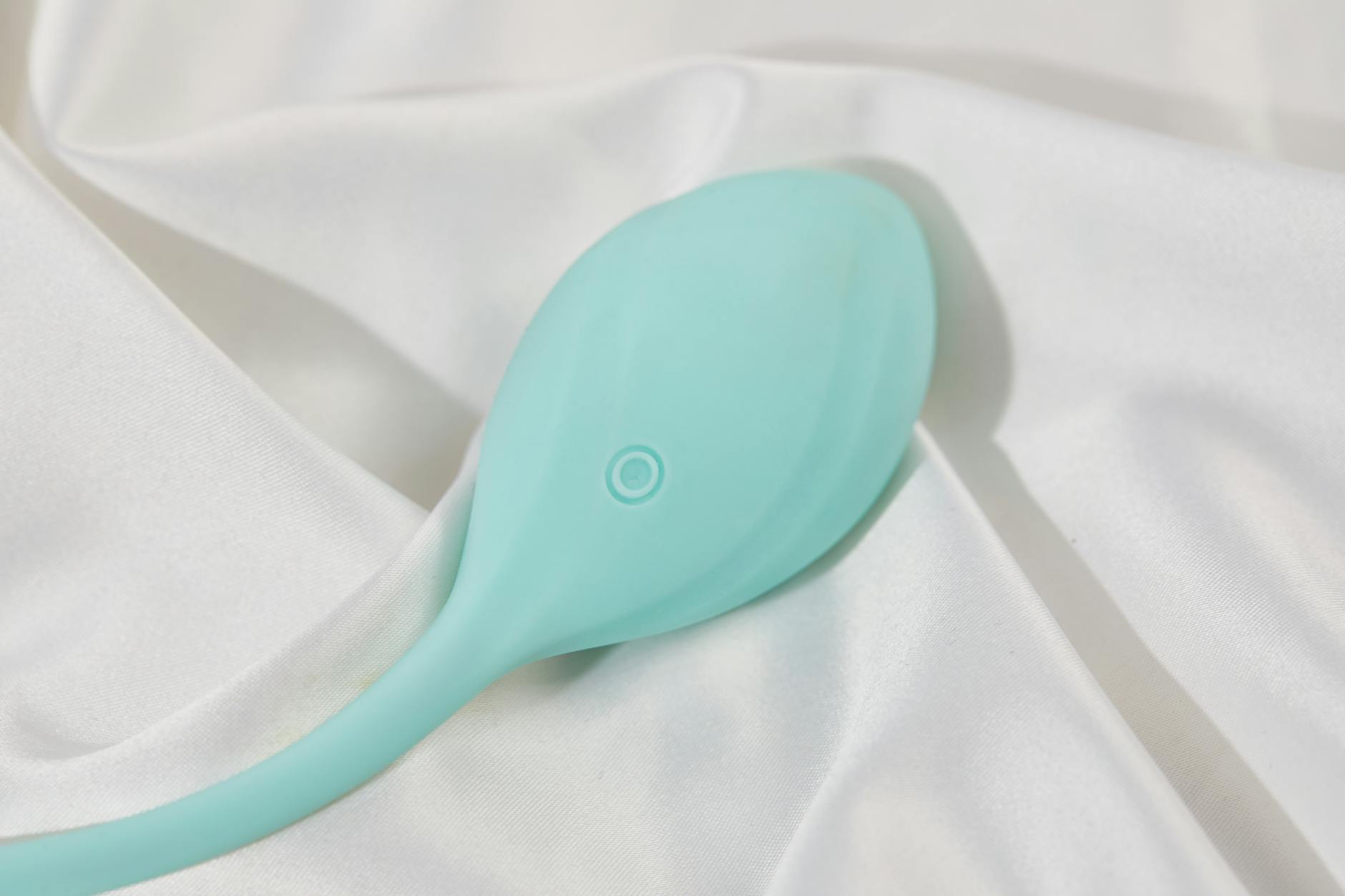
Photo by IFONNX Toys on Pexels
What it looks like when the faster partner needs managing
Now flip it. You're the person who climaxes quickly. Your partner is still warming up. Penetration would feel rushed and incomplete on their end.
This is where a lemon vibrator actually extends your pleasure, not just your partner's. When you can focus on using it on your partner instead of on yourself, your arousal naturally sustains. You're not waiting. You're actively participating in their climb.
If you're typically someone who comes fast and then feels done, this changes your whole experience. Many partners I work with say that watching and feeling their partner's longer arousal actually keeps them engaged longer. The dynamic itself becomes arousing.
You can also take turns. This sounds clinical but it's not. Try three-minute sessions: three minutes of focused stimulation on your partner with the lemon vibrator, then three minutes on yourself. This rhythm naturally elongates the experience and keeps both nervous systems engaged without anyone feeling like they're being left behind.
The conversation piece, which is half the solution
The timing mismatch only becomes a true problem when it's unspoken. You can't solve a problem you're both pretending doesn't exist.
Here's what I recommend saying. Not "We have a timing problem," which sounds like a failure. Instead: "I've noticed we sometimes finish at different speeds. I want us to actually enjoy the same experience. How would you feel about trying something that could help with that?"
Then introduce a lemon vibrator as a tool, not a band-aid. A tool you're both curious about, both willing to experiment with. This reframes it from "Something is wrong" to "We're trying something new together."
Also name what you each need. "I need about 15 minutes of buildup" or "I usually finish pretty quickly but I love staying connected after, so let's plan for that." No shame, just data. Once you're both working from actual information instead of assumptions, the physical solution becomes so much easier.
When penetration timing is the specific issue
Some couples find that one partner needs to be warmed up with external stimulation before penetration feels good, while the other is ready for penetration almost immediately.
A lemon clitoral vibrator solves this perfectly. The faster-ready partner can enter when they're ready while the slower-warming partner is still using the vibrator. You're having two different types of stimulation simultaneously but at your own pace.
This is not a compromise where someone suffers through waiting. It's parallel pleasure. And because the vibrator lets the external-stimulation person continue building, you both typically climax closer together or the experience feels so much more connected that timing matters less.
Start with the vibrator first (slower partner), let arousal build for several minutes, then begin penetration when the faster partner is ready and the slower partner has had real buildup time.
A note on sensation and rhythm during use
Don't assume the same settings work for both partners. The person with a slower arousal ramp often needs lower intensity early and then higher intensity later. The faster partner sometimes prefers starting higher because their nervous system reaches the peak and plateaus quickly.
Experiment without judgment. One session, try her at pattern 2 and him starting at pattern 4. Next time, both at pattern 3. Notice what actually extends pleasure rather than what you think should work.
Also, rhythm matters more than most people realize. A lemon vibrator with pulse and pattern settings (not just steady vibration) gives you more options. You can find a rhythm that matches your partner's breathing, your partner's movement, the dynamic between you. That synchronization is when things actually work.
Frequency, stamina, and the bigger picture
If you're using a lemon clitoral vibrator specifically to manage timeline mismatches, you're probably using it more frequently than someone exploring solo pleasure. That's fine. Just make sure you're rotating stimulation.
One week, the slower-warming partner relies on the vibrator during partnered sex. Next week, focus on extended foreplay and manual stimulation without the vibrator. This variety prevents your nervous system from becoming dependent on one type of input.
Also, stamina is a real thing. If your partner is the faster one and they're used to quick release, their endurance for sustained arousal might actually be shorter than yours. This isn't permanent. With practice and the right tools, that shifts. Give it time.
Why this matters beyond the bedroom
Honestly, the sexual piece is the easy part once you solve the timing. What really shifts is the feeling of being known and accommodated by your partner. When someone arranges their pleasure to meet your pace instead of asking you to perform on their timeline, that's intimacy. That's feeling chosen.
Many couples come back and tell me their overall connection deepened just from having this conversation and solving the timing problem. Because you've basically said, "Your pleasure matters enough to me that I'm going to learn your rhythm and meet you there." That lands deeper than sex alone.
FAQs
How do I know if my partner will feel judged if I suggest using a lemon vibrator for our timing issue?
The suggestion lands differently depending on how you frame it. "I want us to feel more connected during sex, and I think this tool could help" hits very differently than "We have a problem we need to fix." Focus on desire and discovery, not diagnosis. Most people respond well when the opening is genuinely curious and collaborative, not problem-focused. Start the conversation outside the bedroom, when you're both clothed and calm. That helps.
Can a lemon vibrator actually extend pleasure for someone who usually finishes very quickly?
Yes, but with a caveat. If the faster partner uses it on themselves, they might actually finish faster because the stimulation is so efficient. But if they use it on their partner while focusing on their own arousal through movement, positioning, or manual touch, most people report that their pleasure actually sustains longer. It's about splitting attention between the sensation on themselves and the intimacy of stimulating someone else.
What if my partner doesn't want to use toys at all?
Then a lemon vibrator isn't the solution. Timing mismatches can also be addressed through extended foreplay without any toys, different positioning for penetration (some positions let slower-warming partners reach climax more easily), and genuine conversation about pacing. But do name the issue rather than letting it silently fester. Many partners who initially resist toys become curious once they understand the real problem being solved.
Should we use the vibrator every single time we have sex?
No. If you use it every time, your nervous system can become dependent on that specific input. Mix it up. Some sessions with the vibrator, some with hands only, some with extended manual foreplay. Variety keeps sensation fresh and your body responsive. A lemon vibrator is a tool you integrate into your regular intimacy, not a crutch you need every time.
Can mismatched timelines actually damage a relationship long-term?
Yes. When one partner consistently feels rushed or the other consistently feels stuck waiting, resentment builds quietly. One person starts viewing sex as something they do for their partner rather than with their partner. That's a slow divorce. But this is also one of the most fixable sexual mismatches with the right conversation and the right tools. It's genuinely solvable.
What if we're more mismatched than just timing? Like, completely different desires?
Timing mismatch and desire mismatch are different problems. If one partner wants penetration and the other never does, or one wants frequent sex and the other rarely does, that's deeper than a lemon vibrator can address. That needs real conversation, possibly with a couples therapist. A vibrator helps when you both want the same type of intimacy but your bodies hit the milestones at different speeds. That distinction matters.
The thing worth repeating
Mismatched pleasure timelines are common enough that couples often just accept them as unchangeable. But they're not. A tool like a lemon clitoral vibrator, paired with honest communication about what each of you actually needs, can reshape your entire sexual dynamic. You deserve to feel like you're on the same page. You can be.