
Here's what nobody tells you about pleasure after trauma
Trauma doesn't just hurt in the moment. It rewires your entire nervous system, which means your body stops responding to touch the way it used to. You might feel numb, or hypervigilant, or both at once. Your brain is trying to protect you. That's not a flaw. That's literally what brains do after they've learned the world isn't safe.
But here's the good part: your nervous system can learn again. Pleasure isn't gone. It's just waiting for the right conditions to come back.
Why trauma shuts down sensation in the first place
When you experience relational trauma—abuse, betrayal, violation—your body learns to disconnect from sensation as a survival strategy. Your nervous system goes into a state of hyperarousal or shutdown. Many survivors describe it as feeling like they're watching their body from outside of it, or like their body belongs to someone else.
This isn't psychological weakness. It's a brilliant adaptation. Your nervous system did exactly what it was supposed to do.
But adaptation isn't forever. With patience, the right tools, and a sense of agency, your body can relearn that touch can be safe and pleasurable again. That process looks different for everyone, and there's no timeline.
Why a lemon clitoral vibrator works for trauma recovery
Three reasons a clitoral vibrator like the lemon vibrator can be particularly helpful when you're rebuilding pleasure:
First, it gives you control. You're choosing the intensity, the rhythm, the duration. No one else is. This is crucial because trauma often involves a loss of agency. Solo pleasure with a tool you control helps your nervous system learn that you're safe making choices about your own body.
Second, air-suction technology bypasses sensitivity. If direct clitoral touch feels too intense or triggering, suction works differently. It stimulates the broader clitoral network without the same mechanical pressure. For some trauma survivors, this feels less invasive than vibration alone.
Third, you can go slow. The lemon vibrator has multiple patterns and intensity levels. You're not racing toward orgasm. You're practicing the feeling of pleasure as information, not as a destination. That shift changes everything.
The nervous system work that happens alongside the tool
A lemon vibrator is useful. But it's not magic on its own. Your body needs three things to start trusting pleasure again:
Safety signals. Your environment matters. This might mean being alone, having the door locked, turning off your phone, or telling your partner you need uninterrupted time. Your nervous system needs to believe nothing threatening is about to happen.
Slow arousal. Trauma survivors often skip the warm-up entirely because the idea of building arousal feels overwhelming. Try this: spend 10-15 minutes on non-genital touch first. Hands on your arms, your chest, your thighs. Breathe. Notice what feels okay. Then move to the lemon vibrator.
Grounding in your body. Before you start, notice what you feel physically. Where are your feet? What does the air temperature feel like? Are you holding tension anywhere? This practice, called pendulation, helps your nervous system stay present instead of checking out.
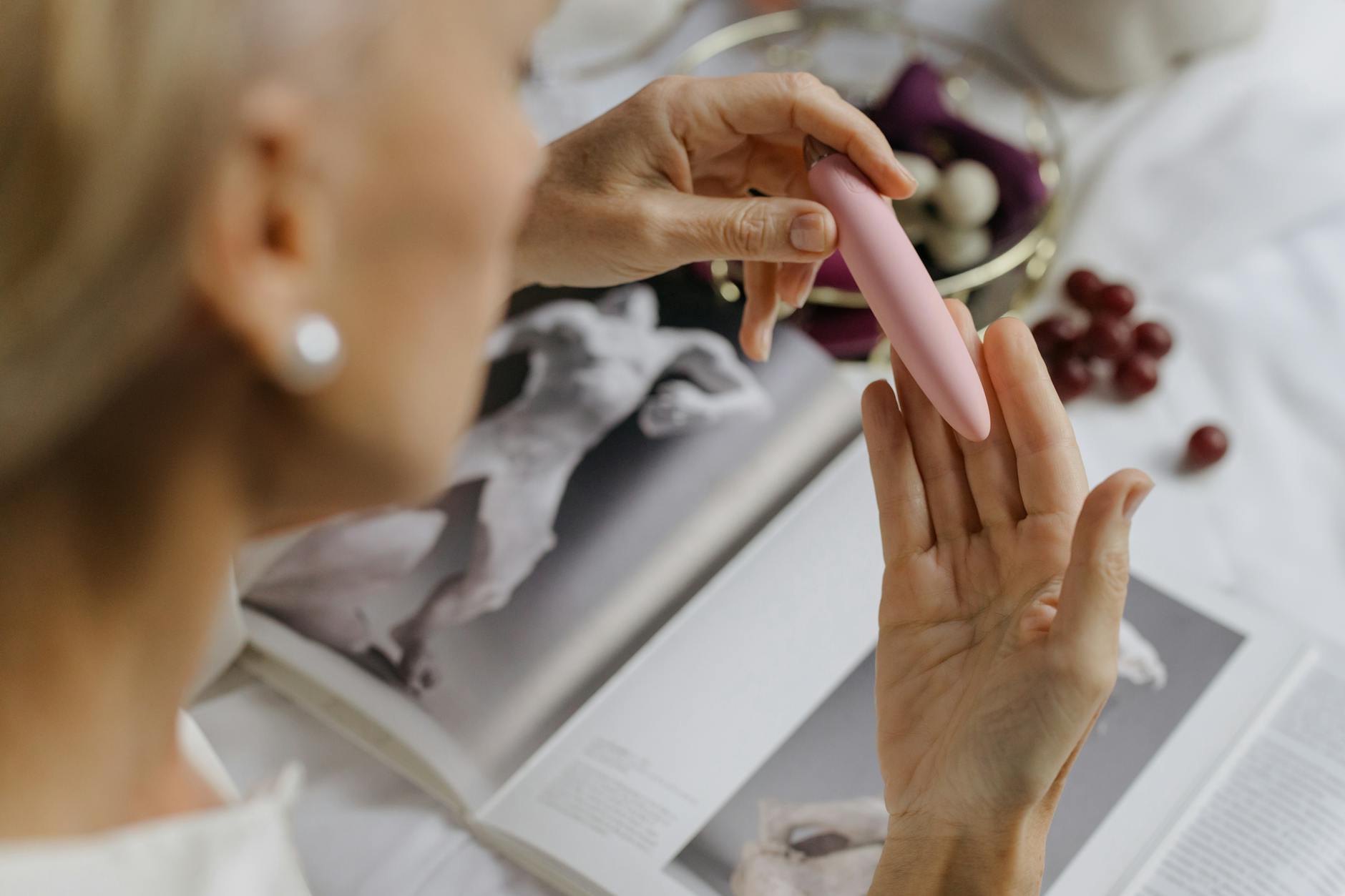
Photo by cottonbro studio on Pexels
Starting small: your first session with the lemon vibrator
If you're rebuilding after trauma, forget everything you know about how solo pleasure "should" look. There's no target. There's no orgasm you need to hit.
Start with the lowest intensity setting. Place the lemon vibrator near (not on) your clitoral area. Some people prefer external contact through underwear or clothing first. That barrier can feel safer. Let yourself notice: does this feel okay? Does your body relax or tighten?
If you feel yourself going numb or floating away, pause. That's dissociation, and it's a sign your nervous system is trying to protect you. Grounding exercises can help: press your feet firmly into the floor, name five things you can see, feel the temperature of the air.
Pleasure should feel like presence, not escape.
When numbness persists (and what to do about it)
Some trauma survivors find that sensation feels dull even with the right tools. Numbness can come from trauma itself, from medication, from depression. If you're experiencing persistent numbness, this is worth exploring with a therapist.
But if you want to keep practicing with the lemon vibrator, try these adjustments:
Increase the intensity gradually over weeks, not days. Your nervous system is learning, and learning is slow. Move the vibrator around. Clitoral sensation varies across the body. Combine sensation with breathing. Deep breathing signals safety to your nervous system.
Remember: numbness doesn't mean you're broken. It means your body needed to protect itself.
Pleasure doesn't have to look like arousal
One of the biggest shifts I see in trauma survivors is learning that pleasure isn't always about getting turned on. Sometimes it's just about noticing: this feels interesting. This feels warm. This feels like my body is mine.
That's enough. That's already healing.
Many people rebuild through what I call "micro-moments of pleasure." Not hour-long sessions. Five minutes with the lemon vibrator where you notice one pleasant sensation. That consistency, over weeks and months, rewires the nervous system more effectively than pushing toward intense experiences.
When you're ready to involve a partner again
If you're in a relationship or thinking about rebuilding intimacy with someone, solo pleasure first is key. You need to know what feels safe to you before adding another person's energy into the mix.
When you do want to share, talk about it beforehand. "I want to use my vibrator. I might want you to stay. I might want you to leave the room. I might change my mind mid-way." Your partner doesn't have to do anything. They just have to know the plan and respect what you ask for.
If your partner pressures you, rushes you, or makes it about their pleasure, that's a sign the relationship isn't safe for healing. How you respond to pressure matters.
The role of therapy alongside pleasure work
A lemon vibrator is a somatic tool. It works with your body. But trauma lives in your nervous system, your memories, your beliefs about safety. Therapy—particularly trauma-informed approaches like EMDR or Somatic Experiencing—targets those deeper layers.
Best results come from combining both: therapy to process the trauma and rebuild safety, and sensual practices (including the lemon vibrator) to help your body learn that pleasure and safety can coexist.
You don't have to choose one or the other. You need both.
Rebuilding is not linear
Some days you'll use the lemon vibrator and feel great. Other days you'll feel triggered. That's normal. Healing isn't a line. It's a spiral. You revisit the same material from slightly higher ground each time.
If you have a day where pleasure feels completely off limits, that's okay. Your nervous system is telling you something. Listen. There's no punishment for taking a break.
The goal isn't to "get over" your trauma or to prove anything. The goal is to slowly, gently reclaim your body as a place of safety and sensation. That work is profound. It deserves patience.
People also ask
Is it normal to feel nothing when using a lemon vibrator after trauma?
Yes. Numbness is a common trauma response. Your nervous system learned that disconnecting keeps you safe. The fact that you're trying to reconnect is already courageous. Keep going slowly. Sensation often returns gradually, not all at once. If numbness persists for months, talk to a therapist.
Can using a vibrator re-traumatize me?
If you move slowly and honor your body's signals, the risk is low. But if you push past dissociation or panic, yes, you can reinforce a trauma response. The key is noticing: am I present in my body, or am I checking out? If you're checking out, pause. Grounding comes first, pleasure comes second.
How long does it take for pleasure to come back after relational trauma?
It depends on the trauma, your support system, whether you're in therapy, and your individual nervous system. Some people feel shifts in weeks. Others take months or years. There's no standard timeline. Consistent, gentle practice matters more than speed.
Should I tell my therapist I'm using a lemon vibrator?
Yes, ideally. A good trauma-informed therapist understands that reclaiming pleasure is part of healing. They can help you notice what comes up during self-pleasure and process it. If your therapist shames you for using a vibrator, that's a sign they're not the right fit.
What if I feel triggered during sex with a partner after using the lemon vibrator solo?
This happens. Solo pleasure and partnered pleasure activate different parts of your nervous system. If you're triggered during partnered sex, pause. Tell your partner. Grounding techniques help. You might need to go slower with a partner than you do alone. That's completely normal and okay.
Can the lemon vibrator help if my trauma is not from a partner?
Absolutely. Any relational trauma—family abuse, assault, medical trauma—can shut down pleasure. The nervous system doesn't distinguish between types of trauma. Reclaiming solo pleasure with a tool you control helps rebuild safety regardless of where the trauma came from.
You deserve to feel good again
Trauma changes your body's relationship to pleasure. It doesn't end it. With patience, safety, and the right tools, your nervous system can learn that sensation and safety can exist together.
That's not minimizing what happened. That's honoring your capacity to heal.
If you're navigating this journey and need support—whether that's therapy, community, or just knowing you're not alone—reach out. You don't have to do this alone.