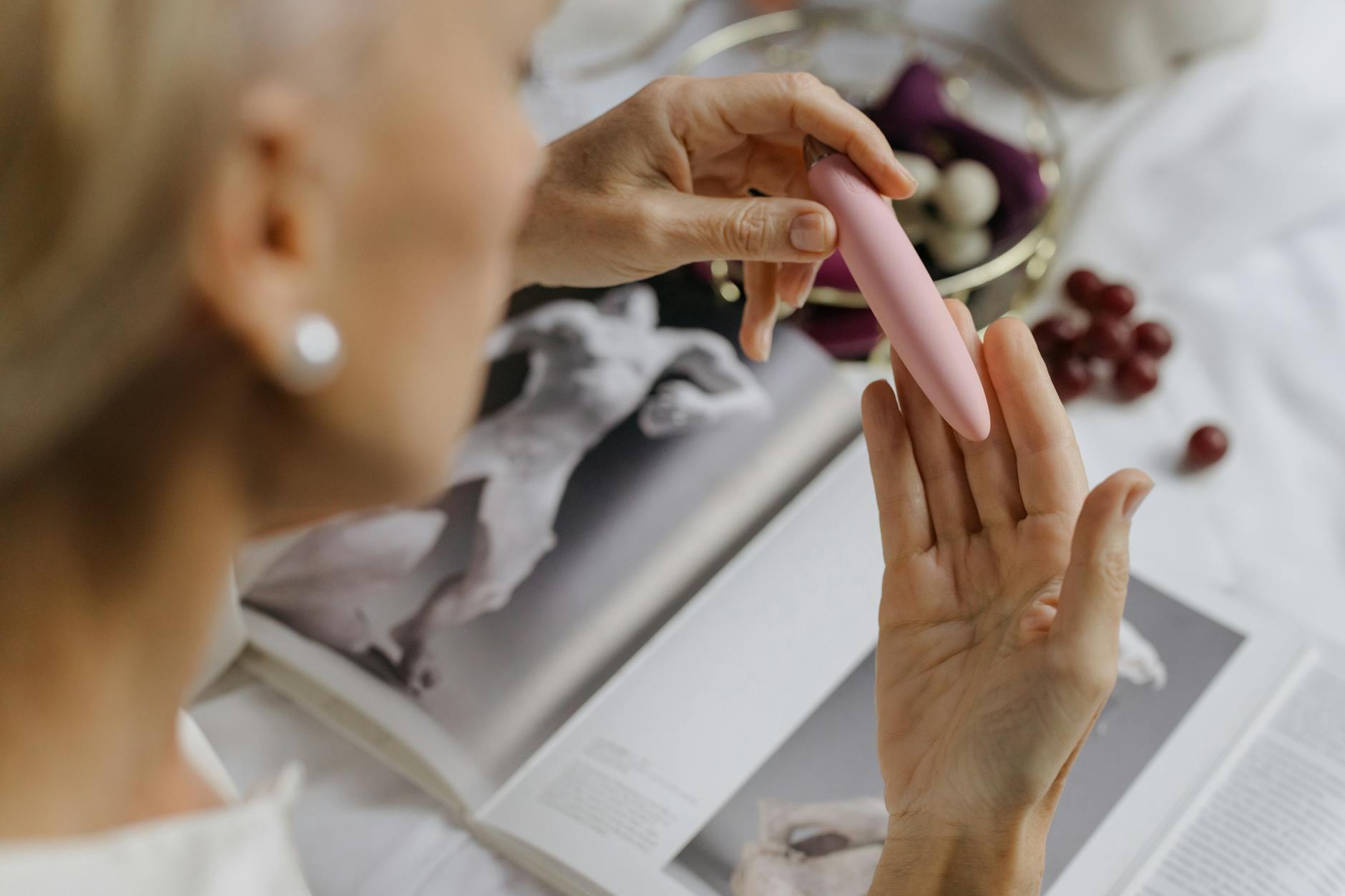
How to Use a Lemon Vibrator When Recovering From Sexual Trauma
Let's be real. After sexual trauma, the idea of pleasure can feel foreign, dangerous, or completely off-limits. Your body might have learned not to trust itself. Your nervous system may still be in protective mode. And if someone tells you to "just relax and enjoy," you probably want to scream.
But here's what I've seen in decades of working with trauma survivors. Pleasure doesn't have to be a return to what was. It can be something entirely new. Something you control completely. And tools like the lemon vibrator can help you rebuild sensation and agency on your own terms, without pressure, without performance, and without anyone else's agenda.
This isn't about rushing back to sex. It's about reclaiming your body as yours.
Why trauma changes your relationship with pleasure
Sexual trauma doesn't just affect the moment it happens. It rewires how your nervous system processes touch, vulnerability, and arousal. Your body learned that pleasure can come with danger. Your brain learned to stay vigilant. Your nervous system may now interpret sensations that used to feel good as threats.
This is not a character flaw. This is your body doing exactly what it was designed to do: protect you.
The challenge is that healing requires slowly teaching your nervous system that pleasure can exist without threat. That touch can be safe. That you have complete control. A lemon vibrator becomes a tool for that retraining because it offers something very specific: you hold the power. You choose when to use it, where to use it, how long, and at what intensity. There's no negotiation, no one else's needs to consider, and no pressure to perform.
Starting with grounding before you start
Before you even pick up a lemon clitoral vibrator, build in what I call a "grounding protocol." This takes five to ten minutes and it matters more than you think.
First, choose a space where you feel completely safe. Not just physically safe, but emotionally safe. A locked door, headphones in, phone on silent. Anything that lets your nervous system know there are no interruptions coming.
Second, do a quick body check. Breathe slowly for a few rounds. Notice where you're holding tension. Many trauma survivors live with chronically tight pelvic floors because they're braced for threat. Spend a minute just breathing into that area without trying to change it. Awareness comes first.
Third, remind yourself out loud of two things: "I can stop anytime" and "This is just for me." These aren't affirmations. They're statements of fact. You can stop. It is just for you. Your nervous system needs to hear that.
Why the lemon vibrator works differently
The Lem and other lemon clitoral vibrators use air-suction technology rather than traditional vibration. This matters for trauma recovery because suction stimulates without the aggressive mechanical sensation that can sometimes trigger a trauma response. It's gentler on the nervous system while still being deeply effective.
The suction creates a rhythmic, consistent sensation that your brain can predict. Predictability is calming to a traumatized nervous system. There's no sudden intensity spike, no unexpected pattern change. You can start at the lowest setting and stay there as long as you need.
Many of my clients tell me that the lemon vibrator feels less invasive than traditional vibrators. It's localized, contained, and doesn't require internal contact if you're not ready. For someone rebuilding trust in their body, that distinction is huge.
Building tolerance gradually
Here's what I tell everyone: you're not training yourself to have better orgasms. You're teaching your nervous system that pleasure is safe. Those are different projects with different timelines.
Start with the lowest setting. Spend your first few sessions just holding the lemon vibrator. Not using it. Just holding it. Let your body get used to its weight, its shape, its presence. This sounds small. It's not. Your nervous system needs to know that this object is not a threat.
On your next session, try turning it on at the lowest intensity for 15 seconds. That's it. Notice what happens. Does your body feel safe? Do you feel a urge to tense up? Do you want to stop? All of those responses are data, not failure.
If 15 seconds feels manageable, try 30 seconds the next time. If you need to go back to just holding it for three more sessions, do that. Healing isn't linear and it's not fast. Your timeline is the only timeline that matters.
Staying present and recognizing dissociation
One of the most common responses to sexual stimulation after trauma is dissociation. Your mind leaving your body. It's a protective mechanism. Your nervous system learned that the safest place to go during anything that feels remotely threatening is somewhere else.
Dissociation during pleasure recovery isn't failure. It's information. It means you're still in protective mode. And that's okay. But you want to gradually build the ability to stay present.
Before and during using a lemon vibrator, anchor yourself to the present moment. Notice five things you can see. Feel the texture of the surface beneath you. Listen for specific sounds. If you notice yourself drifting away mid-session, pause. Take three deep breaths. Ask yourself: do I feel safe right now? If yes, continue gently. If no, stop. Your instinct is trustworthy.
Staying present doesn't mean having an orgasm. It means noticing sensation without your mind leaving. Some sessions will be about pleasure. Many early sessions will just be about presence. Both are wins.
Working with a partner (if you choose to)
If you have a partner and you want to eventually include them, communication becomes the entire foundation. Not the foreplay. The foundation.
Before anything physical, have a conversation about boundaries. What areas of your body feel safe to touch right now. What sensations might trigger you. What you need if things become uncomfortable. Write it down if that helps. Specificity matters more than you think.
If your partner wants to be present while you use a lemon vibrator, set very clear expectations. They are watching. They are not participating unless you explicitly ask. They are not offering feedback or commentary. They're just present and available if you need them.
Many trauma survivors find that knowing a trusted partner is nearby (but not involved) can make the nervous system feel safer. Others need to be completely alone. Both are valid. The key is that you get to decide what your partner's role is, moment by moment.
What to do if you freeze or have a trauma response
Sometimes, even with all the preparation, a trauma response happens. You freeze. Your body goes numb. You feel flooded with fear or emotion. This is not a setback. This is your body processing.
If you freeze, pause immediately. Don't force yourself through it. Instead, bring your attention back to the room. Feel your feet on the floor. Notice the temperature. Open your eyes if they're closed. Remind yourself: "That was then. This is now." Those aren't just words. They're a statement your nervous system needs to hear.
If you feel flooded with emotion, that's also not failure. Pleasure and grief sometimes live in the same nervous system response, especially early in recovery. You can feel arousal and sadness at the same time. You can feel pleasure and anger simultaneously. Multiple feelings aren't contradictions. They're just what's happening.
Have something grounding ready after. A soft blanket. A cup of tea. Your phone to call a trusted friend. A journal. Build in five to ten minutes of self-care after every session, whether or not you had a response. Your nervous system needs to know that using a lemon clitoral vibrator doesn't leave you stranded in an activated state.
When to bring in professional support
If trauma responses feel overwhelming, if you're freezing every session, or if pleasure triggers intense distress, that's the moment to bring in a trauma-informed therapist. There's no shame in that. Actually, it's the most resourceful thing you can do.
A therapist trained in trauma can help you work through blocks that a vibrator alone can't address. They can also help you figure out if your nervous system is ready for this particular tool right now, or if you need to build other foundations first.
You don't have to figure this out alone. And your pleasure recovery doesn't have to happen in isolation.
The long view: rebuilding isn't returning
Here's what I want you to know. Rebuilding pleasure after trauma isn't about getting back to the way things were before. It's about discovering what pleasure feels like when it's entirely yours. When there's no pressure, no performance, no one else's timeline.
The lemon vibrator is a tool. A really good one. But the real work is teaching your nervous system that your body belongs to you. That sensation can be safe. That pleasure is a form of agency.
Start slowly. Honor your pace. Notice what works. Adjust as you need to. And if you need support, reach out.
FAQ: Trauma, pleasure, and lemon vibrators
Can I use a lemon vibrator if I'm still having flashbacks?
Flashbacks and pleasure-building can coexist, but timing matters. If flashbacks are happening daily or if they're intense, work with a trauma specialist first. They may recommend grounding techniques or EMDR before reintroducing pleasure exploration. You're not broken if you need to wait. You're being smart.
Is it normal to feel nothing when I use a lemon clitoral vibrator?
Completely normal. Trauma can create emotional numbness as a protective response. Your nervous system may need many sessions of gentle exposure before sensation returns. Some people find that sensation gradually builds over weeks or months. Others find it helpful to pair the vibrator with grounding techniques like cold water on the wrist or ice held in your hand during use. Contrast can help wake up numbness.
What if I only want to use the vibrator alone, not with a partner?
That's exactly right for many people, especially early in recovery. Solo pleasure means zero negotiation, zero performance pressure, and complete control. If partnered pleasure eventually feels right, great. If solo is what feels safe and nourishing, that's also completely valid. Your pleasure doesn't need an audience.
Can trauma survivors have orgasms with a lemon vibrator?
Yes, many do. But orgasm isn't the goal early on. Pleasure and presence are. Orgasm is a downstream benefit, not the mission. If you focus on just being present and building tolerance, orgasms often come naturally once your nervous system feels safer. And if they don't for a while, that's okay too. The point is reclaiming sensation on your terms.
How long does it take to rebuild pleasure after sexual trauma?
There's no single timeline. Some people feel noticeable shifts in weeks. Others take months or years. Healing isn't linear. You might have a great session and then need to go backward for a while. That's not failure. That's healing happening in real time. The key is patience with yourself and professional support when you need it.
Should I tell my partner I'm using a lemon vibrator for trauma recovery?
That depends entirely on your relationship and your comfort. If you have a trauma-informed partner, sharing that you're doing this work can be meaningful. If you need to keep this private for safety or other reasons, that's also your call. Your body, your information, your boundaries. There's no "should" here.
Your recovery is entirely yours
Healing from sexual trauma is some of the hardest work a person can do. The fact that you're even considering rebuilding pleasure means you're choosing yourself. That matters.
A lemon vibrator can be part of that journey, but it's not the whole journey. Your healing is. Your pace is. Your boundaries are.
If you're working through trauma and want more support on pleasure recovery, reach out. We're here to help you reclaim what's yours.