
The thing nobody tells you about new relationships and toys
New relationships are already emotionally exposed. You're learning each other's bodies, preferences, and vulnerabilities. Adding a lemon clitoral vibrator into that mix can feel like one more exposure, one more moment where rejection is possible. Here's what actually happens when you bring it up thoughtfully: your partner either feels trusted with something real about your pleasure, or they don't. And if they don't, you've learned something important early.
That's the frame that makes everything that follows easier.
Why introducing a lemon vibrator early matters more than you think
I see a pattern with couples in their first year. When someone waits months or even years to mention that they use a lemon vibrator, the introduction becomes loaded. By then, the partner has assumptions about what pleasure looks like in the relationship. It feels like an accusation. "You haven't been doing it right." It feels like infidelity. "Why do you need this if I'm here."
None of that is fair, and all of it is predictable.
When you mention toys early, it's just information. "I use a vibrator solo. I'm thinking it might feel good with you too." Same fact, completely different emotional weight. It's not a criticism of your partner's skill. It's not a demand they become something they're not. It's just anatomy and preference.
The second reason is practical: if your partner is uncomfortable with lemon clitoral vibrators, you want to know that now, before you're deeply attached. Mismatches on pleasure tools often signal deeper mismatches on pleasure itself, on experimentation, on agency. Better to surface it.
The actual conversation (and why "hey, I have a thing" is enough)
Don't engineer a special moment. Don't create a whole event around it. That's fear talking, and fear gets in the room and makes everything weird.
Bring it up the way you'd mention any preference. During sex, after sex, over breakfast. "I've been thinking I'd like to use my lemon vibrator next time we're together." That's the whole sentence. You don't need to justify it or explain the mechanics or apologize.
If they ask questions, answer them straight.
"Will you still want me to touch you?" Yes, usually more. Most people find that combining a lemon vibrator with a partner's hands or mouth feels deeper than either alone.
"Does this mean I'm not enough?" No. Pleasure isn't a zero-sum game. A vibrator is a tool that does one thing well. It doesn't replace anything your partner does.
"Have you used this before with someone else?" Depends on your history. If yes, be honest. If it's new to you and new to the relationship, say that. Either way, avoid defensiveness. This is just conversation.
What to expect: three common reactions and how to handle each
The enthusiastic partner. They say yes immediately. Maybe they're curious. Maybe they've thought about toys too. This is the easiest path. Move straight to logistics and go slowly the first time.
The hesitant partner. They say maybe. They want to think about it, or they're nervous about how it will feel, or they're worried they'll do something wrong. This is the most common response. Let them sit with it. Bring it up again in a few days. "Still thinking about it?" Sometimes people need processing time. That's normal and fine.
The resistant partner. They say no, or they say yes but you can tell they mean no. Their body language shifts. They get quiet. This is the hardest conversation, but it's important. You can say, "I notice you seem uncomfortable. Tell me what's going on." Not angry. Curious. You're looking for the real obstacle: shame, past trauma, insecurity, a mismatch in sexual values. Sometimes it's fixable. Sometimes it's not. Either way, you've learned something true.
Setting up for actual success the first time
Four things make the first experience feel good instead of awkward.
Start with just you and the vibrator. Let your partner watch, or just be in the room. This takes the pressure off "using it together" and lets them see that it's not weird, that you're the same person, just more present in your own pleasure. Lots of partners become interested once they see how it changes their partner's breathing or responsiveness.
Keep it low-key the first time it's between you. Don't make it the whole event. Have sex normally, and maybe toward the end, ask if they want to try it. This frames it as a small addition, not a production.
Communicate the whole time. "Does this feel good?" "Do you want me to use a different speed?" "Is this too much sensation?" This isn't clinical. It's normal sex talk. It tells your partner that their comfort matters, and it keeps you connected.
Have backup plans. If it feels weird, it's fine to stop. You can always try again later. If your partner is uncomfortable, let them opt out of touching or being inside you while you use it, but you can still enjoy it in the room. There are lots of ways to make this work.
The intimacy part nobody talks about
Here's what often surprises couples: using a lemon vibrator together is vulnerable in a way that makes you closer, not farther apart. You're asking your partner to watch you pursue your own pleasure. You're saying, "I trust you to see me like this." Most partners feel honored by that trust.
Over time, when the vulnerability is handled well, couples report that toys become part of their ordinary pleasure. Not a big deal, not a threat. Just another thing that feels good.
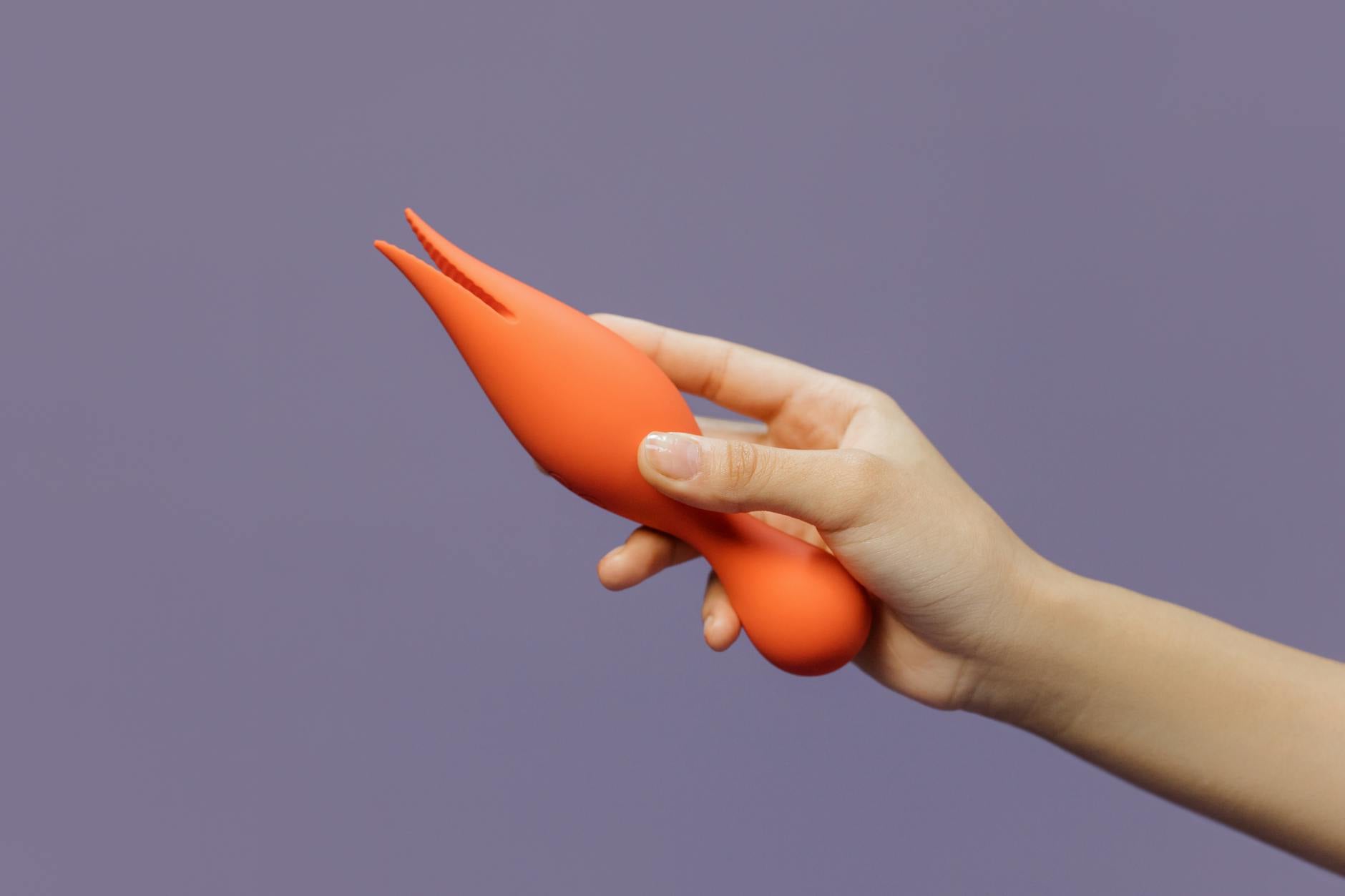
Photo by cottonbro studio on Pexels
If your new partner is also navigating stress or anxiety during sex, you might find that introducing a lemon clitoral vibrator also removes some pressure. Sometimes people bring toys into relationships because they want to reduce performance anxiety, not increase it. That's worth naming. "I think this might help us both relax and enjoy ourselves more."
What to do if they say no (and you really want to use a toy with them)
This is the harder part. You can't coerce someone into being comfortable with toys. But you can understand what's driving the no.
Is it shame about sexuality? Sometimes talking about where that came from helps. Is it insecurity? Reassurance might work, though repeated reassurance usually doesn't. Is it a mismatch in sexual values? That's harder to bridge, and it might mean compromise: you use your lemon vibrator solo, and you accept that this isn't something you'll share together.
The real question underneath is: how much does this matter to you? If it's essential to your pleasure, and your partner won't budge, that's information about your sexual compatibility. Not a dealbreaker automatically, but worth serious consideration early in a relationship.
When to revisit the conversation
If your partner said no but didn't seem firm, you can bring it up again in a few months. New comfort sometimes develops over time as people relax into the relationship. But don't turn it into a campaign. One follow-up conversation, maximum. After that, you're pushing, and pushing erodes trust.
If your partner became more comfortable over time and now wants to try, awesome. Go slow again. People sometimes change their minds positively, and that shift is worth honoring with care.
The practical stuff: lube, positions, and what actually happens
Water-based lubricant is your friend. Even if natural lubrication is good, a bit of extra glide makes everything easier and less intense. Have it within reach before you start.
For position: you can use a lemon vibrator in almost any position you'd have sex. Some couples find it easier when the receiving partner is on their back or side, which gives the other person clearer access and lets them use their hands elsewhere. Some couples like it during oral. There's no wrong way, and you'll figure out what feels best through trying.
Timing matters too. Some people prefer the vibrator earlier in sex, when they're still building arousal. Some people want it near the end, to intensify toward orgasm. Ask and listen.
FAQ: Questions new couples actually ask
Is it normal to need a vibrator if I'm attracted to my partner?
Completely. Attraction and vibrator use are unrelated. Most people who use vibrators are in happy relationships and use them solo and partnered. Your body responds to certain types of stimulation because of nerve density and anatomy, not because your partner isn't attractive. A lemon clitoral vibrator does what hands can't do efficiently. That's all.
What if my partner wants to use it on me but I'm uncomfortable?
You get to say no. You get to go slow. You get to try it and stop if it doesn't feel right. Comfort is non-negotiable, even with a new partner you trust. If they pressure you, that's a red flag about your relationship, not about the vibrator.
Can we use a lemon vibrator if one of us has never used one before?
Yes. If neither of you has used one, that's actually easier. You're both new, so there's no pressure to perform a certain way. If only your partner is new to vibrators, they might be more comfortable watching you use it first, then trying together when they feel less awkward.
How do I introduce the idea without seeming like I'm criticizing their skill?
Frame it as something you want to add, not something missing. "I've been thinking it might feel amazing to add this to what we do together." Not, "I need something you're not giving me." The words matter.
What if they think I've cheated or been with someone else because I mentioned the vibrator?
That's insecurity talking, and it's worth addressing directly. "I've used this solo for a while. I'm not hiding anything. I'm just interested in exploring it with you too." If they continue to interpret your solo pleasure as infidelity, that's a bigger conversation about trust and control that might need a therapist.
Is it weird to use a lemon vibrator during partnered sex the first time, or should I practice alone first?
Either is fine. Some people feel more confident introducing it after they've used it alone and know how their body responds. Some people prefer to try it with their partner present because it removes the shame of solo use. You choose based on what feels right to you.
The real thing underneath all of this
Introducing a lemon vibrator to a new partner is a conversation about permission. Permission to have preferences. Permission to pursue pleasure actively instead of passively receiving it. Permission to ask for what you want.
Those conversations make relationships stronger. They might feel awkward in the moment. But they're the foundation of real intimacy, the kind where both people are actually present and asking for what they need.
If you're building something with someone new and toys matter to you, trust that the right partner will meet you there. And if they don't, you've learned something important about whether this relationship is built for you.