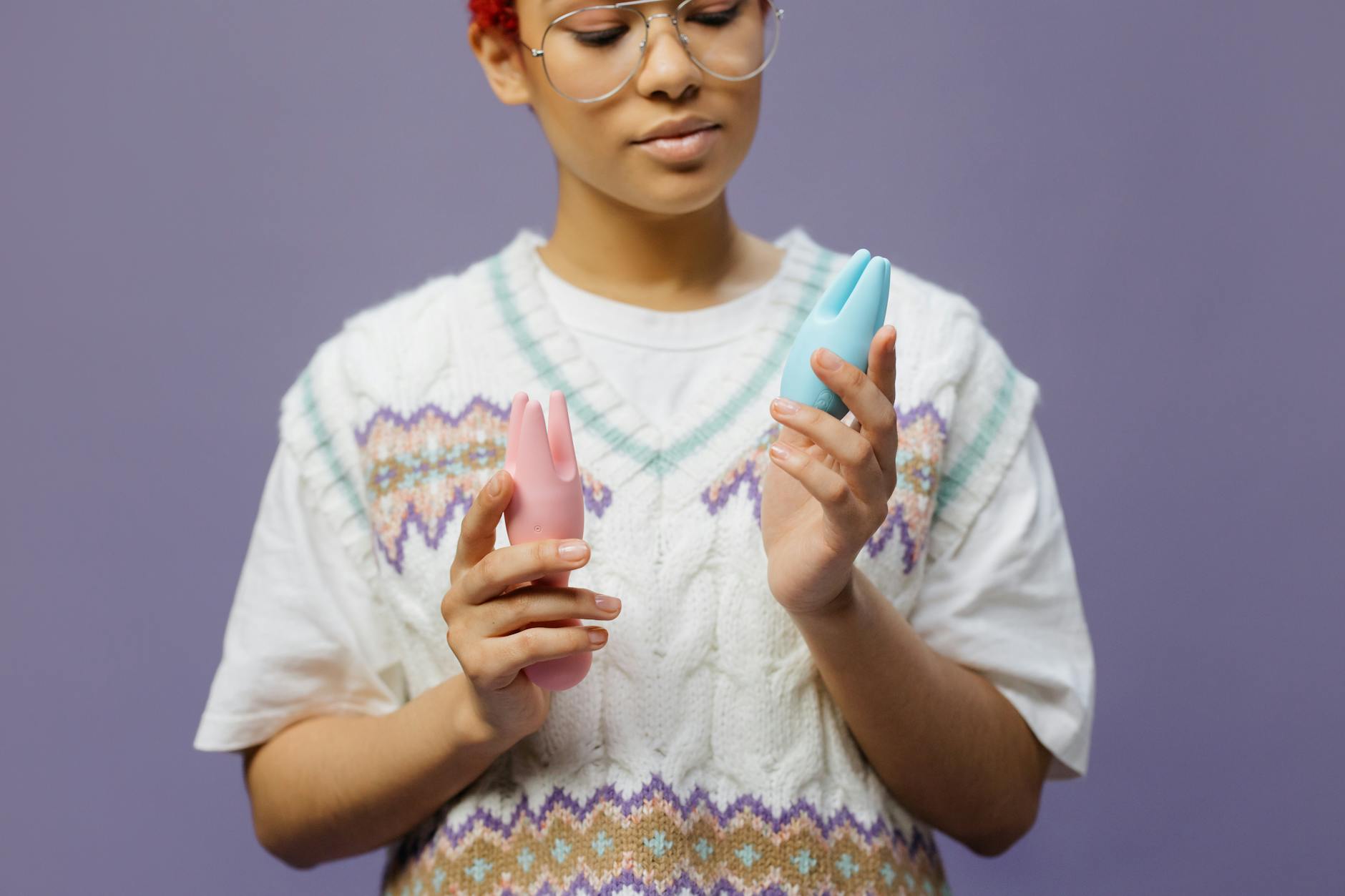
When your body becomes a stranger
Honestly, the most common thing I hear from clients after a long gap in sexual activity isn't "I'm worried I've forgotten how." It's "My body doesn't feel like mine anymore." That distinction matters because the first is a skills problem. The second is a neurological one.
When sensation goes unused for months, years, or even longer, the neural pathways that light up during arousal get quieter. Not dead. Quieter. Your clitoris still has the same nerve endings, the same capacity for pleasure. But the signal between your body and your brain has been on standby. Reactivating it takes patience, the right kind of stimulation, and honestly, a tool built for exactly this moment.
Why pleasure feels different when you're restarting
Three physiological things happen during an extended absence from sexual activity.
First, the pelvic floor muscles tighten. Not permanently, but noticeably. This is partly protective. If your body hasn't been touched intimately in a while, the muscles around your vulva contract slightly, which can make sensation feel muffled or even uncomfortable when you do resume activity. It's your nervous system being cautious.
Second, arousal response time slows. When you're not regularly sexually active, your body doesn't move into the arousal state as quickly. You might need 30 minutes of warm-up instead of 10. That's not dysfunction. That's just how the nervous system recalibrates when a stimulus hasn't been present.
Third, and this one surprises people. Sensation can actually feel too intense at first. You might touch yourself and feel almost a pins-and-needles sensation, or rawness, where you'd normally feel pleasure. This is your nervous system essentially waking up. It's temporary.
The psychology underneath the physiology
Here's what I see in my practice: the body's resistance to pleasure after time away is partly about nervousness. If you've been in a relationship that ended badly, or if you've had trauma, or even if you're just anxious about whether your body still "works," your nervous system knows. And it will protect you by making arousal harder.
This isn't shame. This isn't something you're doing wrong. Your autonomic nervous system is doing its job. When you're stressed or uncertain, your sympathetic nervous system dominates. Arousal requires parasympathetic activation. Your body's hesitation is actually a sign it's paying attention to you.
Restarting pleasure solo, without the pressure of a partner or performance expectations, fundamentally changes that equation. When you're alone, your nervous system relaxes. The pressure drops. And that's exactly when sensation can begin to rebuild.
Why a lemon vibrator works better than you'd expect
A clitoral vibrator like the Lem is specifically designed for reactivating sensation after dormancy. Here's why they work better than fingers or other toys for this particular situation.
The suction pattern on a Nancy's Lemons clitoral vibrator creates consistent, buildable stimulation without requiring you to do anything. You don't have to think about pressure, angle, or pace. That removes one layer of performance anxiety right there. The vibration pattern itself is designed to activate the nerves systematically, starting shallow and building gradually.
Second, the intensity is controllable. If sensation feels too raw, you can start at the lowest setting. As your nervous system relaxes and your body remembers what pleasure feels like, you can increase gradually. This graduated approach is exactly what rebuilding requires.
Third, a lem vibrator provides novelty without unpredictability. Your body knows what a hand feels like. It might be anxious about that. But a tool with a new texture and rhythm is neither a memory nor a threat. It's just a new sensation. And new sensations can bypass some of the protective resistance your body might otherwise mount.
The practical strategy for restarting
If you're picking up a lemon adult toy or clitoral vibrator for the first time after months or years away, here's the scaffolding I recommend.
Start with zero expectations. Seriously. The goal is not orgasm. The goal is sensation awareness. You're teaching your nervous system that touch is safe again.
Schedule it. Block 45 minutes, not 10. Most of that will be warm-up. Set the environment. Warm room, soft lighting, phone on silent. You're not rushing. Rushing activates the sympathetic nervous system again.
Begin without the toy. Spend 15-20 minutes touching yourself without vibration. Feel your vulva. Notice where sensation is dull and where it's sharper. You're not trying to build arousal yet. You're reacquainting yourself with geography.
Introduce the lem vibrator at the lowest setting. Place it against your outer labia first, not directly on the clitoris. Let your body adjust to the sensation. This might take 10 minutes. That's normal.
Stay at one intensity level for at least three sessions. Your nervous system needs repetition to down-regulate and accept the stimulus as safe. Jumping from level 1 to level 5 in a single session signals threat, and your body will tighten accordingly.
Stop before you think you should. If you reach mild arousal, that's a win. Stop there. You're training your nervous system that pleasure is available, not that you have to chase an orgasm. Orgasm will return. Right now, the goal is sensation.
The mental game when your body feels resistant
One thing I tell clients: your body's resistance after time away isn't laziness or brokenness. It's information. Your nervous system is telling you it needs reassurance.
The reassurance comes from consistency. Using a lemon clitoral vibrator two or three times a week, same time, same ritual, tells your nervous system that pleasure is a regular, safe part of your environment again. After about 3-4 weeks of consistent, low-pressure touch, most people notice arousal returns more easily. After 8-12 weeks, sensation usually feels closer to baseline.
But here's the thing nobody mentions: sometimes pleasure returns different than it was before. That's okay. Your body has been through time. Life has happened. You might find you like different intensities, different rhythms, different contexts. That's not loss. That's evolution.
When discomfort signals you should pause
There's a difference between "this feels intense" and "this hurts." If you're experiencing sharp pain, rawness that doesn't improve after the first few sessions, or persistent discomfort, check in with a doctor. Sometimes if the break has been really extended, vaginal atrophy can be present, and a topical treatment can help. That's common and totally treatable.
But emotional discomfort is different. If you feel panic, shame, or grief during solo play, that's your nervous system telling you there's something else underneath the physical resistance. That's not a sign to stop. It's a sign to slow down, maybe work with a therapist, and approach the process with more gentleness.
Rebuilding confidence is rebuilding connection
After working with hundreds of people restarting their sexual lives, I've noticed something: the confidence that returns isn't just sexual. It's broader. When you prove to yourself that your body still works, that pleasure is still available, that you can trust your own sensation, something shifts. You carry yourself differently. You're less apologetic about your needs.
Using a lemon vibrator during this restart isn't about the toy. It's about reclaiming your nervous system. It's about telling yourself that your body deserves attention, that pleasure is a form of self-care, and that time away doesn't erase your capacity for joy.
Start small. Be patient. Let your body remember at its own pace. The pleasure that comes back might surprise you.