
Let's start with what most couples don't talk about
You've thought about it. Maybe you've even looked at lemon vibrators online. But the conversation hasn't happened yet because you're not sure how to bring it up without sounding needy, desperate, or like you're unhappy with your partner. Here's the thing: introducing a lemon vibrator to partnered sex isn't actually about dissatisfaction. It's about expanding what's possible.
Most couples never have this conversation at all, which means they're leaving pleasure on the table. Not because vibrators are essential, but because the communication that happens around introducing one is genuinely good for your relationship.
Why the conversation feels risky (but it isn't)
There's a narrative most of us absorbed somewhere: toys are what you use when your partner isn't enough. That's the story that makes bringing it up feel scary. And it's completely wrong.
Here's the actual neuroscience: your body doesn't care if stimulation is coming from a partner's hand, mouth, or a lemon clitoral vibrator. Your nervous system just registers pleasure. A tool doesn't replace intimacy. It changes the sensation, which can actually deepen the experience because you're both focused on what feels good instead of falling into muscle memory.
Think of it this way. A vibrator isn't competition. It's a third hand.
How to actually bring it up
The conversation matters more than the timing, but timing still matters. Don't do this during sex (too much happening), right before bed (too vulnerable), or when either of you is stressed. Pick a calm moment. A walk. A quiet evening after dinner. Somewhere you're sitting down but not staring directly at each other (side by side actually lowers defensiveness).
Start with curiosity, not a request. "I've been thinking about exploring something new together. Would you be open to that?" If they say yes, you've already won the hard part. If they hesitate, ask what they're worried about. Usually it's one of three things: "Will you still want me?" "What does this mean?" or "That sounds complicated." Address the actual worry, not the surface objection.
Then be specific. Don't say "I want to use a toy." Say "I've been reading about lemon vibrators and I think it could feel really good. I'd love to try one together and see what happens." Specificity removes shame.
Why a lemon vibrator specifically makes this easier
Lemon vibrators, particularly air-suction designs, work differently from traditional wand vibrators. They don't vibrate in the way your partner's hand does, which means there's no weird comparison happening in your head. The sensation is genuinely novel for both of you.
The suction action also means your partner can still be hands-on. They can control the device, adjust the intensity, and stay involved in the moment. It doesn't feel like you're checking out. It feels like you're exploring together.
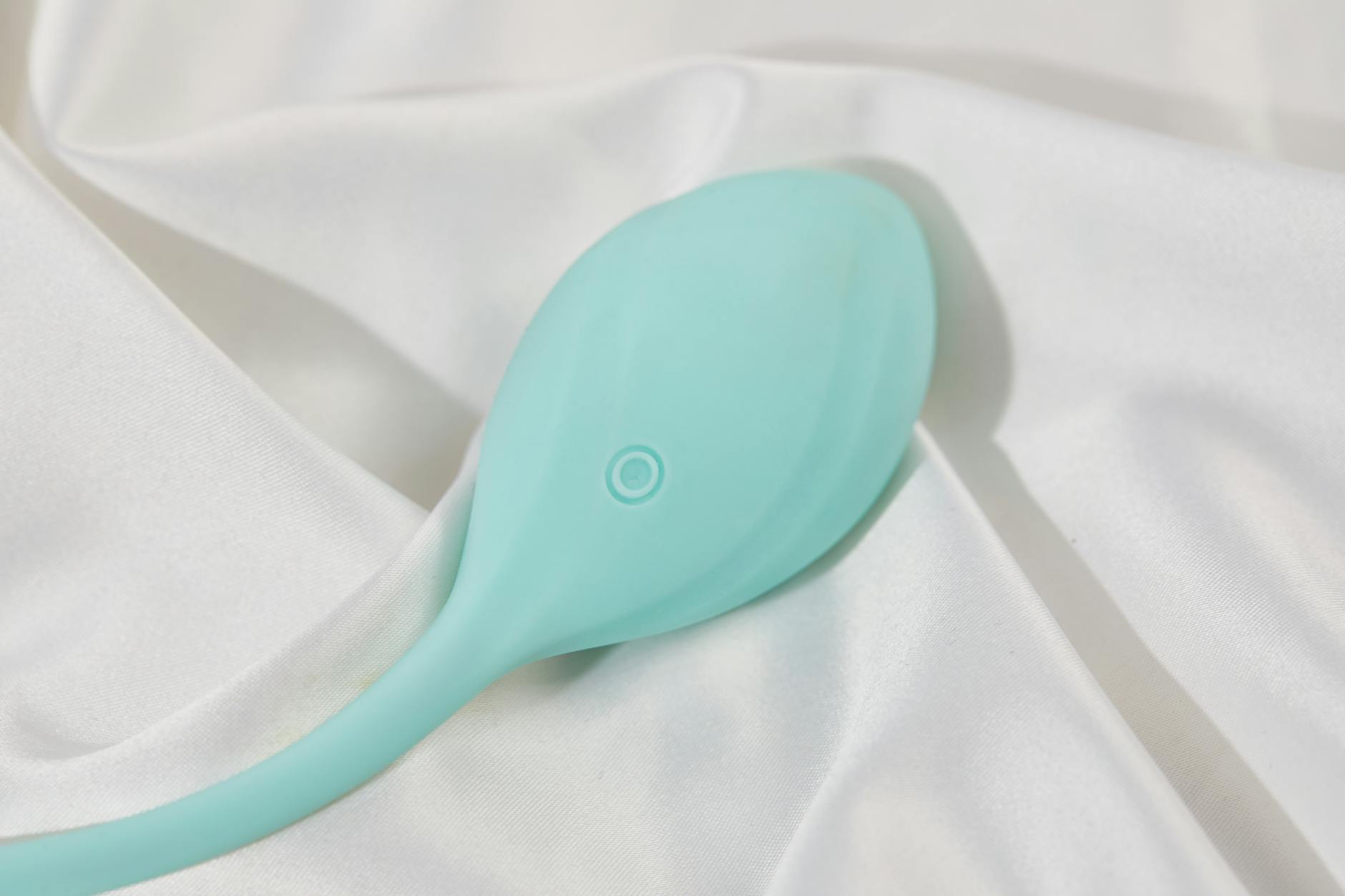
Photo by IFONNX Toys on Pexels
Positioning ideas that actually work
The goal is to keep your bodies connected while introducing the vibrator. Here are the setups I see work best.
During foreplay. One partner uses the lemon vibrator on the other while kissing, touching, maintaining eye contact. This is the lowest-pressure entry point. No performance expectations. Just sensation.
During penetration. The receiving partner holds or wears the vibrator, or the penetrating partner uses it while inside. This amplifies sensation for both people and doesn't require switching positions mid-flow.
Mutual stimulation. Taking turns using the vibrator on each other, with no other sex happening. This is oddly intimate because you're paying attention to each other's body rather than your own simultaneous pleasure. It builds trust.
Side by side. One person uses the lemon vibrator on themselves while their partner watches, touches them, or uses their hands elsewhere. This is voyeurism-lite, and a lot of couples find it unexpectedly hot.
Start with whatever feels least vulnerable. Foreplay is usually the move.
What to expect the first time
The first time you use a lemon vibrator together, the vibe might be weird. Good weird, but weird. You're both paying attention to what's happening instead of just doing what you've always done. That hyperawareness can feel awkward or really sexy, depending on your headspace.
Here's what helps: go slow, talk out loud about what feels good, and don't expect an orgasm to be the win. The win is having a conversation, trying something new together, and learning what your partner enjoys. That data is valuable long-term.
If it doesn't feel amazing the first time, that's normal. Your body and brain need a few tries to relax into a new sensation. Try again in a few days. By the third or fourth time, most couples report that the initial awkwardness dissolves and something genuinely pleasurable takes its place.
The emotional stuff that matters more than the logistics
The real benefit of this conversation isn't the vibrator. It's that you're practicing vulnerability and asking for what you want. That's relationship-building work.
If introducing a lemon clitoral vibrator exposes friction in your partnership, that's actually useful information. Maybe your partner is scared of change. Maybe there are deeper insecurities about attraction or desire. Those are real conversations to have, and a couples therapist can help. But that's different from "toys are bad." That's "we have things to work through."
Most couples don't have that problem. Most couples try it, enjoy it, and move on. But a few discover that the resistance isn't about the vibrator. It's about other stuff. And naming that is progress.
Logistics: care, storage, and what to buy
If you're going to do this, buy something you both trust. A lemon vibrator from Hello Nancy is designed for this. They're body-safe silicone, quiet, and built for couples play because they're intuitive to use.
Clean it after every use with warm water and a little soap. Store it somewhere accessible but private. If you're not sure about bringing it out, it's going to sit in a drawer and feel like a failure. Make it normal by making it easy to access.
As for what to buy, start simple. A single-function lemon vibrator is less intimidating than something with ten settings. You can explore options later.
What if your partner says no
If you bring this up and your partner isn't interested, don't push. But do ask why. "I respect that. Can you help me understand what's making you hesitant?" Sometimes it's about religious beliefs, past trauma, or just different levels of comfort with sexuality. Those are all legitimate.
You can also ask if they'd be open to exploring it again in a few months. People's minds change. Sometimes the no is temporary.
But if it's a hard no and it matters to you, that's information too. You get to decide what you need sexually and whether a partnership can meet that need. Both people's desires are valid, even when they don't align.
The actual hard part
The hardest part of this isn't logistics or technique. It's deciding that your pleasure matters enough to ask for it. That your curiosity is worth a potentially awkward conversation. That your relationship is solid enough to handle growth.
Most of the time, it is. And the couples who have this conversation often report that it opened something up, not just sexually but emotionally. They learned they could ask for things. They learned their partner wasn't going to reject them for wanting something new. They learned that wanting more doesn't mean they were unhappy with what they had.
That's worth the brief awkwardness of a conversation.
FAQ: Questions couples actually ask
What if I'm the only one who wants to try a lemon vibrator?
Your desire matters. You can absolutely use a lemon vibrator solo or suggest it as a gift to yourself. Partnered sex isn't the only valid context. That said, if your partner is interested in intimacy with you, most people are curious about what makes their partner feel good. Frame it as "here's something I want to explore" rather than "you're not doing it right."
Will using a lemon vibrator together make us depend on it?
No. Your nervous system doesn't rewire from one experience. If anything, it expands what feels good. Most couples use vibrators sometimes and don't use them other times. It's a tool, not a requirement.
How do I bring this up if we have a lot of shame around sex?
Start smaller. Read an article together. Watch something educational. Get the conversation happening in a context that feels less directly demanding. Sometimes naming the shame out loud helps. "I feel embarrassed talking about this, but I'd like to" is a vulnerable way in. Shame hates witness. Often just saying it out loud makes it smaller.
What if one of us finishes way faster with a vibrator?
That's actually common and workable. You can use it only during one person's portion of sex. You can use it on the slower partner. You can use it before penetration to amplify pleasure earlier. Timing mismatches aren't a vibrator problem. They're a communication problem, and you solve them by talking about what you both need.
Is it normal to feel jealous of the vibrator?
Yes. Partners sometimes feel replaced or like they're not enough. That's worth naming directly. "I notice you seem hesitant. I want to make sure you know this is about expanding what we do together, not about you being insufficient." Reassurance matters here, and it's a fair ask.
How often should we use a lemon vibrator if we try it?
As often as you want. There's no rule. Some couples use it weekly, some monthly, some have forgotten about it in the closet. Go by what actually feels good to both of you. If it's not improving your experience, it's just a toy taking up space. If it is, keep going.
The bottom line
Introducing a lemon vibrator to your partnership isn't about your relationship being broken. It's about deciding that pleasure is worth exploring together, that curiosity is okay, and that your bodies deserve attention and novelty. The conversation is the real work. The vibrator is just the catalyst.
If you want to talk through specific concerns or figure out what might work for your relationship, reach out to Hello Nancy. We're here for questions that go beyond the logistics.