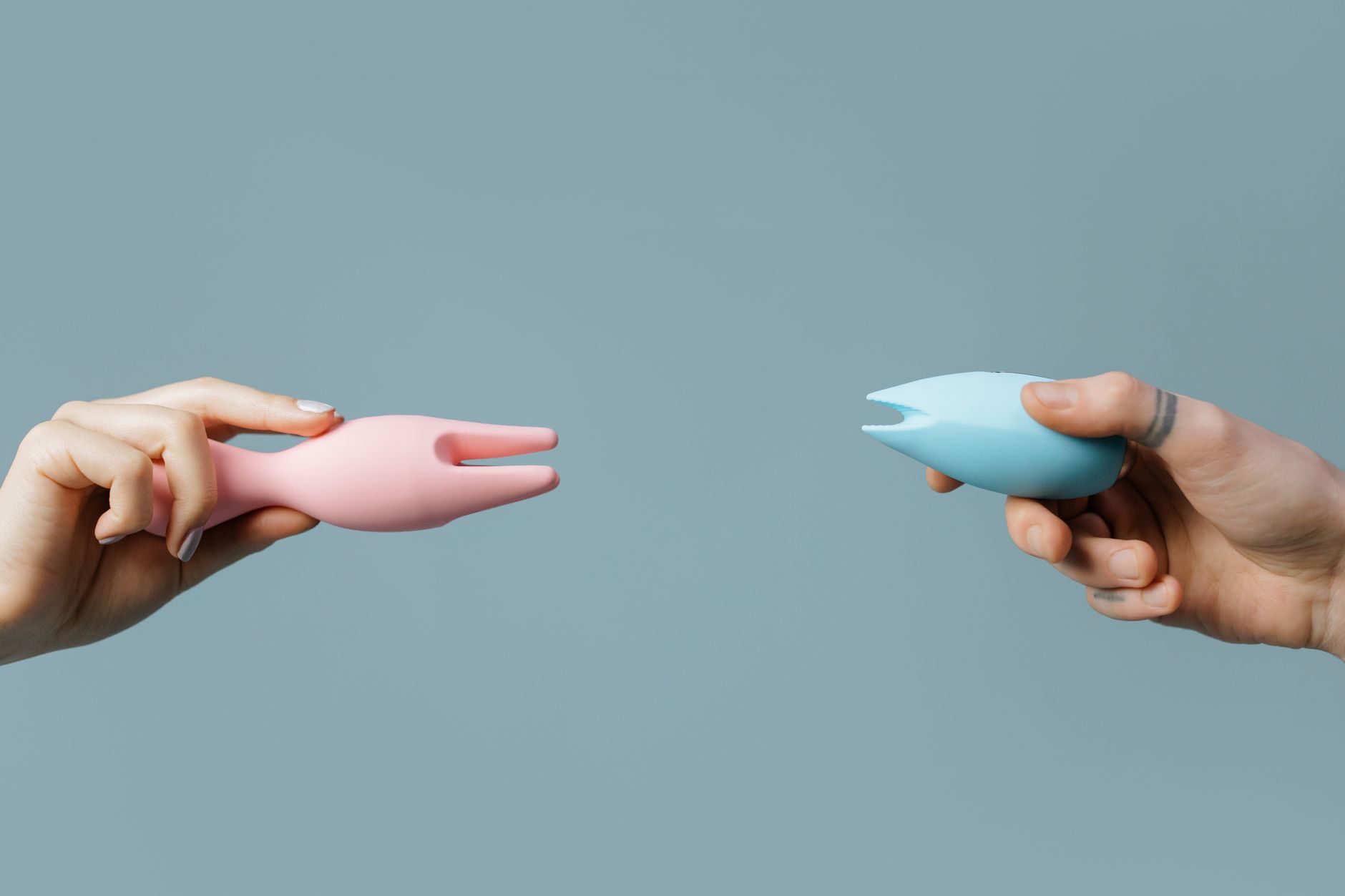
Let's start with what you actually feel
There's a difference between pleasure and pain. A massive one. And if you've ever grabbed a wand vibrator and felt like someone was sandpapering your clitoris, you know exactly what I'm talking about. The problem isn't you. The problem is the tool. Traditional wands deliver intense, continuous vibration through direct friction. For sensitive clits, that's like trying to enjoy a song that's playing at full volume with the treble cranked all the way up. It's technically sound, but it's not something you want to listen to.
Lemon vibrators work differently. They use suction instead of friction. The distinction matters because suction and vibration activate different nerve pathways. One feels like it's trying to drill through you. The other feels like a gentle, rhythmic draw that builds pleasure instead of abrading it.
The anatomy that matters
Your clitoris has roughly 8,000 nerve endings packed into a tiny space. For context, that's more nerve density than your fingertips, your lips, or anywhere else on your body. That abundance of sensation is why pleasure can feel so intensely good. It's also why overstimulation can feel like torture.
When you're dealing with a sensitive clitoris, what's actually happening is one of a few things. The tissue might be thinner than average (which happens after menopause, during hormonal shifts, or just genetically). The nerve endings might be closer to the surface, which makes them more reactive. Or you might have vulvodynia, a condition where the nerves stay in a heightened state of alert. In any of these cases, direct mechanical stimulation feels harsh because your nervous system is essentially working at a higher baseline.
A lemon vibrator's suction mechanism bypasses that problem. Instead of creating friction on the surface tissue, suction gently draws the clitoral tissue into the opening of the device. Inside, a gentle vibration pattern stimulates those 8,000 nerve endings without the grinding sensation you get from a wand. It's like the difference between a massage and a scrub. Both touch your skin, but one leaves you feeling soothed and the other leaves you raw.
How suction actually works on a neurological level
Here's the physics part, and it matters. When a wand vibrator touches your clitoris, it's applying rapid sideways motion directly onto the external tissue. That vibration translates through your skin and into the nerves beneath. For people with average sensitivity, this feels good. For people with sensitive clits, it feels like the vibration is amplifying your baseline. You're already at a seven on the sensation dial. The wand turns it into an eleven. Your body can't handle it, so you tense up, arousal stops, and pleasure collapses.
A lemon clitoral vibrator creates a vacuum. That suction draws the tissue into a small chamber where the vibration happens inside a protected space, not on the surface. From a nerve perspective, you're getting stimulation, but the signal is traveling through tissue that's being gently held in place. The vibration isn't rattling across the surface. It's concentrated and enclosed. Your nervous system reads this as intense but manageable.
Research on suction-based devices shows they activate a different cluster of nerve pathways than wands do. Specifically, they engage the mechanoreceptors that respond to pressure and displacement, not just the nociceptors that can register overstimulation. The result is a broader, deeper activation of pleasure without the sharp edge.
Why wands fail sensitive clits
Wands are powerful. They're affordable. They're popular. They're also basically one-size-fits-all, which is the problem. The Hitachi Magic Wand has been a staple for decades, and for people with average to low sensitivity, it works great. But its broad, flat head is designed to cover a lot of surface area with intense vibration. For a sensitive clitoris, that broad contact point is too much. You can't escape the vibration by shifting position because there's nowhere to shift to. The entire clitoral area gets hammered at once.
Most wands also come in two settings: too intense or way too intense. There's rarely a middle ground. You either white-knuckle through it or you give up. Some people try holding the wand slightly away from the skin to reduce intensity, but then you lose direct contact and the sensation becomes diffuse and unsatisfying.
With a lemon vibrator, the smaller contact point means you have more control over where the stimulation concentrates. You can shift slightly to adjust intensity. The suction naturally creates a boundary that your body recognizes, which paradoxically makes it easier to relax into rather than tense up against.
What sensitive really means
Sensitivity falls into a few categories, and the response strategy is different for each. Some people have pain with direct touch. Others have numbness and need more intensity, but traditional wands cause overstimulation even at low settings. Some have dynamic sensitivity, where certain days feel tender and others don't. A few deal with vulvodynia or previous pelvic floor trauma, where any direct vibration triggers protective tension.
For pain-based sensitivity, a lemon clitoral vibrator's gentler approach helps because you're not fighting the device. For numbness-based sensitivity, you get focused stimulation without the grinding feeling. For dynamic sensitivity, you can use the device on lower settings without losing the effect because suction is inherently gentler than direct vibration at equivalent power levels.
Even if you don't have diagnosed sensitivity, you might simply prefer this experience. Some people just don't like the buzz of a wand. They find it irritating, mechanical, or overstimulating even if their clitoris isn't technically sensitive. For those people, trying a lemon vibrator or similar suction device is a revelation. It's not that they're broken or too sensitive. It's that they were using a tool designed for a different nervous system.
The practical adjustments that make suction better
One reason people stick with wands despite not liking them is pure inertia. You know how a wand works. You turn it on, you hold it in place, things happen. Suction devices require a slightly different approach, but it's not complicated.
First, the fit. A lemon vibrator creates a seal around your clitoral tissue. That seal is what generates the suction. Some people find this takes a moment to get used to. You're not just pressing it against yourself. You're creating an enclosed space. It takes maybe three tries to find the right positioning where the suction feels intentional instead of weird. After that, it's automatic.
Second, the patterns. Most lemon vibrators come with multiple pattern options. With a wand, patterns usually just mean different speeds of the same vibration. With suction devices, patterns change the rhythm of the suction itself. One might pulse gently. Another might build in intensity. Another might alternate. This variety is actually a massive advantage for sensitive clits because you can find a rhythm that matches your nervous system rather than fighting against one locked-in setting.
Third, the warm-up. Because suction is inherently less harsh, people with sensitive clits can typically start using it earlier in their arousal cycle. You don't need to warm up as extensively with a lemon vibrator as you would with a wand. That said, warming up never hurts. Fifteen minutes of foreplay before introducing the device will still give you better results than diving straight in, but you won't feel like you're fighting your body's natural response.
The transition from wands to suction
If you've been using a wand and it's been painful or overstimulating, switching to a lemon clitoral vibrator might feel like rediscovering pleasure after years of forcing it. That's a real thing. You might find that your body is actually capable of more pleasure than you thought, but it was the tool that was the bottleneck.
Start with the lowest intensity setting. Let your body adjust to the sensation of suction. It's unfamiliar at first, and your nervous system needs a moment to categorize it as pleasure rather than threat. After two or three sessions, your body will start recognizing the signal and responding more readily.
If you're using a device like the Lem, you have twelve different patterns to explore. Don't stay on pattern one forever, but don't jump to pattern twelve either. Try moving up one or two and see how your body responds. You're looking for the place where sensation feels intense but never painful, building but never numbing. That sweet spot exists, and it's usually somewhere in the middle third of the intensity range.
Consider also what your body needs on a given day. Sometimes sensitivity shifts with your hormonal cycle, your stress levels, or just how much sleep you got. On high-sensitivity days, you might use a lower pattern and take longer to build. On other days, you might jump straight to something more intense. Having a device that gives you that range means you're never fighting the tool. You're just adjusting to your actual needs.
FAQ: Your questions about lemon vibrators and sensitivity
Will a lemon vibrator work if I have vulvodynia or pelvic floor dysfunction?
Maybe, but carefully. Vulvodynia and pelvic floor dysfunction both involve heightened nerve sensitivity and protective muscle tension. A device that doesn't trigger that protective response is genuinely helpful. Suction-based devices like lemon vibrators are gentler, which reduces the chance of triggering pain. That said, if you have diagnosed pelvic floor dysfunction, working with a pelvic floor physical therapist alongside using any toy is the right move. The therapist can help you understand what your body needs and clear any structural issues before pleasure becomes part of the picture again. A lemon vibrator can be part of that recovery, but it's not a replacement for professional support.
Can I use a lemon vibrator if I'm numb down there?
Absolutely. Numbness and hypersensitivity are actually different problems that sometimes get confused. If you're numb, you might think you need something more intense. But intense wand vibration on numb tissue can feel like hammering on a dead limb. It doesn't feel good. It feels nothing. A lemon vibrator's focused suction can actually help wake up sensation because it's activating your nervous system in a different way than wands do. You might find that sensation gradually returns as you use the device, especially if numbness is related to stress, anxiety, or previous trauma rather than permanent nerve damage.
How is a lemon vibrator different from other suction toys?
Not all suction devices are the same. Some use powerful suction that can feel intense and overwhelming. Others use gentler suction but with less precise stimulation. A quality lemon clitoral vibrator like the Lem is engineered specifically for the clitoris, with suction and vibration patterns designed to complement each other. The suction is strong enough to be effective but calibrated so it doesn't feel like your clitoris is being vacuumed off. That precision is what makes the difference between a toy that works and a toy that changes your life.
What if I still don't like suction after trying it?
Then you don't like suction. That's fine. Some people's nervous systems just prefer direct vibration. If that's you, the issue isn't that you're doing it wrong. It's that your body has a preference. Honour that. There are plenty of other options, including gentler wands, external vibrators designed for sensitive tissue, or even exploring non-vibration forms of stimulation like massage or partnered touch. Pleasure shouldn't feel like you're fighting your own body.
Can I use lube with a lemon vibrator?
Yes, but be smart about it. Water-based lube is your friend here because it doesn't degrade silicone and it helps the suction seal feel even better. Some people find that a small amount of lube around the opening of the device helps the suction feel smoother and less sudden. Others find lube makes the seal unpredictable. Try it both ways and see what your body prefers. If you do use lube, you might need to adjust the positioning slightly because the consistency changes how the seal feels.
How long does it take to adjust to using a suction vibrator?
Most people adjust within two to four uses. Your body is incredibly smart, and once it recognizes that suction means pleasure instead of threat, the nervous system stops resisting. You might not have an amazing experience the first time you use a lemon vibrator. That's normal. First times are often about exploration and adjustment rather than intense pleasure. By the third or fourth session, things usually click. Your body relaxes, your nervous system settles, and you actually feel what the device is capable of delivering.
The bottom line
If you've been using wands and feeling like pleasure is something you have to power through, a lemon vibrator might be what changes that equation. Suction-based clitoral stimulation isn't hype or marketing. It's physics and neurology working together. Your sensitive clitoris isn't broken. It just needed a different approach. A lemon clitoral vibrator delivers that approach by replacing friction with suction, intensity with precision, and frustration with the kind of pleasure that actually makes sense for your body.
The fact that your clitoris is sensitive isn't a limitation. It's a signal. It means your nervous system is responsive. You just need tools that speak that language instead of tools that shout over it.
Have questions about how a lemon vibrator might work for your specific situation? Reach out to our team. We're here to help you find what actually works for your body.