Let's talk about what's actually happening
Libido doesn't work on a toggle switch. It fluctuates. Some months you're thinking about sex constantly. Other months it feels like someone turned down the volume on your entire nervous system. You're not broken. Your hormones shifted.
Estrogen, progesterone, and testosterone dance together in a cycle that most people never fully understand until it stops working the way they expect it to. When that cycle gets interrupted by hormonal contraceptives, perimenopause, medication, stress, or just the random disruptions of life, desire does something counterintuitive. It either spikes or vanishes entirely. And most people interpret this as a character flaw or a relationship problem. It's neither.
How hormones actually control desire
Estrogen isn't just about lubrication (though it does that). It influences dopamine sensitivity, which is your brain's motivation and reward chemical. When estrogen dips, dopamine becomes harder to activate. Sex sounds fine in theory. In practice, scrolling feels more interesting.
Progesterone does the opposite. It's calming and grounding. High progesterone can tank sexual interest because your body is signaling "rest and nest, not adventure." Some people feel wild desire right before their period; others feel nothing.
Testosterone (yes, people with vulvas produce it) drives physical arousal. When hormones fluctuate wildly, testosterone can swing too, and suddenly your body isn't responding to touch the way it usually does. The neural pathways are still there. The signals just aren't firing as fast.
Here's what matters: none of this is permanent, and none of it means your capacity for pleasure has changed. It means the conditions for pleasure have shifted. And when conditions shift, your tools need to shift too.
Why a clitoral vibrator works differently during low-desire phases
When libido is high, you can often reach pleasure through thought alone, or with minimal stimulation. During low phases, that won't work. Your brain isn't primed. Waiting for arousal to build naturally could take forever, and frustration kills the whole thing.
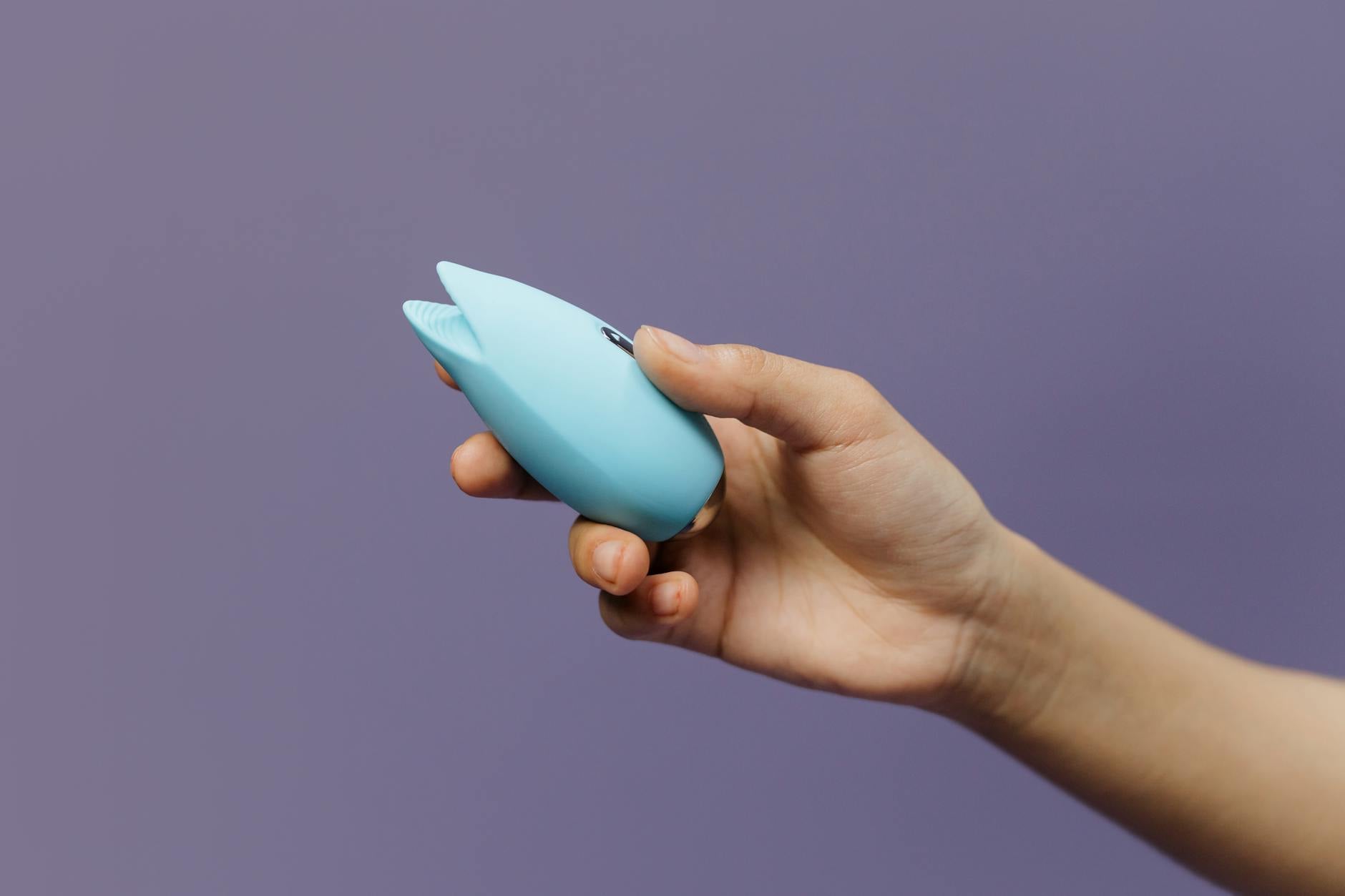
A lemon vibrator (or any clitoral vibrator) bypasses the motivation phase. It doesn't ask your brain for permission. It delivers direct, consistent stimulation to one of the most sensitive nerve-dense areas of your body. With roughly 8,000 nerve endings clustered in the clitoris, you're not negotiating with your hormones. You're working with your nervous system's architecture.
This matters more during hormonal valleys than peaks. When desire is high, penetration or foreplay might be enough. When desire is low, external clitoral stimulation through a device like the Lem becomes the most efficient path to reconnection.
Timing is everything during hormonal shifts
If you track your cycle, use that data. Most people experience desire peaks around ovulation (when estrogen spikes) and right before their period (when hormonal shifts create a surge of neural activity). Plan solo exploration during these windows if you can. You'll need less warm-up time and less intensity adjustment.
During the low phases (early follicular, mid-luteal), budget different expectations. You might need 20 minutes instead of 5. You might need a lower intensity setting on your vibrator. You might need to be fully clothed except for what you're stimulating. Whatever removes friction. The goal is removing barriers, not creating new ones.
With a partner, this is the conversation nobody has. "I'm in a low-desire week" shouldn't feel like bad news. It's information. It means solo touch with a clitoral vibrator might be your fastest path back to feeling good, and that's fine. That's not a sign the relationship is broken. That's data.
What settings actually work during hormonal valleys
The Lem and other lemon vibrators offer multiple patterns. During peak desire, you might love the oscillating patterns. During low-libido phases, start with the basic suction mode at a lower intensity and work up from there.
Why? When your nervous system isn't primed, aggressive or complex vibration patterns can feel overwhelming or even irritating. Suction-style stimulation feels more like pressure than pure vibration. Pressure can feel grounding when your brain is foggy.
Start at pattern 1 or 2. Spend time there. Let your nervous system wake up slowly. You're not rushing to orgasm. You're reminding your body that pleasure exists and that it's available to you.
Many people find that during low phases, the journey matters more than the destination. If you reach orgasm in 10 minutes, great. If you spend 20 minutes exploring sensation without coming, that still counts as reconnection. Both rebuild the neural pathway between your brain and your body.
Solo play resets your relationship with desire
Here's something I see over and over in my practice. When libido fluctuates, solo touch often restarts things faster than partnered sex.
Why? Because solo, there's no performance pressure. You're not watching a partner watch you. You're not waiting for them to get ready or checking in or negotiating timing. You're just you and your body and a device that delivers consistent sensation. That removes cognitive load, and cognitive load is one of the biggest desire killers.
When you've spent 10 minutes getting reacquainted with your own pleasure using a clitoral vibrator, something shifts. You remember that you're capable of arousal even when hormones are choppy. You remember that your body still works. And that memory often makes it easier to access desire with a partner later.
Take it seriously. This isn't a band-aid. This is maintenance.
When to talk to a doctor about hormonal libido swings
Fluctuation is normal. Disappearing entirely for months is worth mentioning to your doctor.
If you're on hormonal contraception and your desire has tanked since starting it, that's a real side effect. Some birth control pills suppress testosterone or mess with how your brain processes dopamine. Switching methods often fixes it. Don't white-knuckle through a medication that's killing your sexuality.
If your cycles are wildly irregular or your mood is unstable alongside the libido changes, you might be in perimenopause. That's not an emergency, but it is worth mapping with a clinician who specializes in hormonal transitions. Many treatments exist. Many of them are game-changers.
If you've recently started an antidepressant or anti-anxiety medication and desire flatlined, mention that to your prescriber. Alternatives usually exist. Your mental health matters and so does your sexuality. You shouldn't have to choose.
The reframe that actually helps
Libido isn't something you have or don't have. It's something you practice.
When hormones dip, desire won't come to you. You go to it. You set aside 20 minutes. You use a lemon clitoral vibrator. You remind your body that sensation and pleasure are available. You do this not because you're "fixing" yourself, but because you're maintaining something important.
That shift in thinking changes everything. You're not waiting for desire to return. You're actively reconnecting with it. And tools like the Lem exist precisely because that process works better with consistent, reliable stimulation when your own nervous system is in flux.
Your pleasure doesn't disappear when hormones shift. It just needs different conditions to emerge. Give yourself those conditions. You deserve to feel good even during the choppy weeks.
People also ask
Why does my libido drop so dramatically during certain weeks?
When progesterone rises (typically in the luteal phase, after ovulation), your brain chemistry shifts toward rest and safety. Dopamine sensitivity drops, and your body's arousal response slows. This is biologically normal. Combined with hormonal interactions that affect serotonin and other neurotransmitters, low-libido weeks are a feature of a functioning hormonal system, not a bug. Most people experience this cyclical pattern, and it usually reverses when the phase ends. If it doesn't, hormonal imbalance or medication side effects might be at play.
Can a clitoral vibrator help me access pleasure when I'm in a low-desire phase?
Yes. A lemon vibrator works by delivering direct, consistent stimulation to the clitoris without requiring your brain to be in a primed state. During high-desire phases, your nervous system is already activated, so minimal stimulation works. During low phases, your brain's reward system is dampened. External clitoral stimulation bypasses that motivation barrier. The Lem and similar devices are particularly effective because they provide suction-style pressure rather than pure vibration, which many people find grounding when arousal is slow to build.
Should I use a different vibrator setting when my libido is low?
Most people benefit from starting at lower intensity settings during low-libido phases. Your tissues might be less engorged, and your nervous system is less primed, so aggressive patterns can feel overstimulating or uncomfortable. Begin with a basic suction pattern at intensity 1 or 2 and increase gradually. The goal during these phases is often exploration and reconnection rather than rapid orgasm, so slower, gentler settings often work better than maximum intensity.
Is low libido during my cycle a sign something is wrong with my relationship?
Not necessarily. Hormonal cycles are independent of relationship quality. Many people in deeply connected relationships experience predictable libido drops during certain cycle phases. What matters is how you and a partner respond to that information. If you name it as hormonal and temporary rather than treating it as rejection, it becomes data instead of conflict. Using solo tools like a lemon clitoral vibrator during low phases can also reconnect you with your own desire before bringing that energy back to partnered sex.
How long does it take to rebuild desire during a low phase?
That varies widely. Some people reconnect with pleasure in a single session with a vibrator. Others need several sessions across a few days to feel arousal building again. The key is consistency rather than pressure. A 15-minute session with a clitoral vibrator every few days during a low phase often reignites sensation faster than waiting passively for desire to return on its own. Think of it as priming the pump rather than forcing something that isn't there.
Can hormonal birth control permanently lower my libido?
For some people, yes. Certain hormonal contraceptives suppress testosterone or alter dopamine sensitivity in ways that persist as long as you're taking them. If your libido tanked after starting birth control and hasn't recovered, that's worth discussing with your gynecologist. Switching to a different formulation, dosage, or method often restores desire. Your sexuality matters. If a medication is killing it, alternatives exist.
Final thought
Your libido isn't a character trait. It's a biological signal that fluctuates. When it dips, reaching for tools like a lemon vibrator isn't cheating or admitting defeat. It's respecting how your body actually works and meeting it where it is. If you're struggling with how to rebuild desire in a long-term relationship, or navigating how arousal takes time to build, both of those conversations benefit from understanding your hormonal baseline first. Hormones explain a lot. Once you know what's actually happening, reconnection becomes possible.