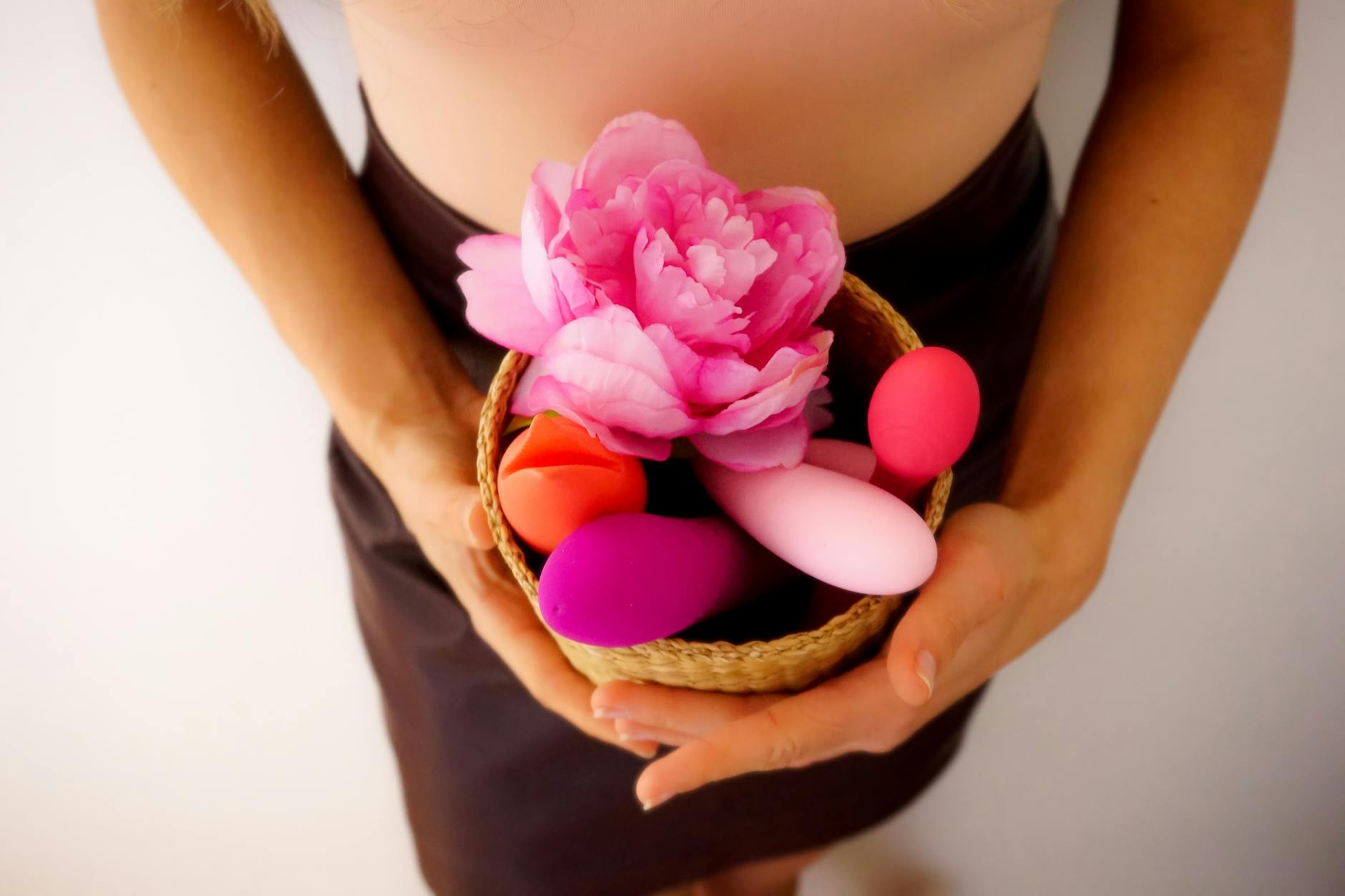
How to Use a Lemon Vibrator When Postpartum Recovery Affects Sensation
Let's be real: nobody tells you that your vulva might feel like someone else's for the first few months postpartum. Swelling, numbness, pain with touch, hypersensitivity, changed nerve responses. All of it is normal. None of it is permanent. And all of it affects how pleasure feels when you're ready to come back to it.
The tricky part isn't that sensation changes postpartum. It's that you're also sleep-deprived, healing, managing hormonal shifts, and possibly dealing with a partner who's unsure about timing. Adding a lemon clitoral vibrator into that mix isn't straightforward. But it can be transformative if you approach it right.
What actually happens to sensation after birth
Here's the physiological breakdown. During pregnancy and delivery, your pelvic floor stretches enormously. Nerves get compressed, tissue swells, blood flow redirects to healing. If you had tearing or an episiotomy, scar tissue changes how sensations register. Even without trauma, hormonal shifts mean less estrogen, which thins tissue and changes lubrication. Prolactin (the breastfeeding hormone) actively suppresses sexual desire in many people.
On top of that, your brain is in protect mode. You're hypervigilant to your baby's needs. Oxytocin is flooding your system through bonding and feeding, not sexual arousal. Your nervous system is wired for caregiving, not pleasure.
The result: touching your clitoris might feel numb, or raw, or painful, or just completely different than it did before. You might lose sensation entirely for weeks. Some people experience hypersensitivity instead, where light touch feels unbearable. All of this is expected. None of it means you're broken.
Why the lemon vibrator works differently postpartum
A clitoral suction vibrator like the Lem works particularly well during postpartum recovery because it doesn't rely on direct friction. Instead, it creates a gentle suction and pulsing stimulation that engages nerve endings without requiring the kind of pressure that can aggravate healing tissue. The sensation is distributed over a wider area, which means you're less likely to hit a numb spot or a particularly tender area.
The Lem's design also lets you control intensity from the very first pattern. You start at the gentlest setting and gradually work up. Your postpartum body needs that flexibility. You're not trying to achieve orgasm. You're trying to reconnect with sensation. The tool matches that goal.
Timeline matters, and clearance is just the start
Your obstetrician will probably clear you for penetrative sex around 6 weeks if you had a vaginal delivery, or 8 weeks if you had a cesarean. That clearance is real, and you shouldn't ignore it. But clearance for penetration doesn't mean clearance for pleasure exploration. Your tissues are still healing at 6 weeks. Swelling is usually still present. Scar tissue is forming.
If you want to introduce a lemon vibrator into your recovery, I'd suggest waiting until 8-12 weeks postpartum, even if you got the green light earlier. That gives your nervous system time to begin recalibrating. It gives scar tissue time to soften. It gives you a psychological breathing room to stop seeing your body as a feeding and healing apparatus and start seeing it as yours again.
That timeline is flexible. Some people feel ready at 6 weeks. Others don't feel ready until 6 months. Honor your own pace. This isn't a race.
How to start: the first session protocol
Pick a time when your baby is asleep and you're not going to be interrupted for at least 30 minutes. Interruption ruins everything. Your nervous system won't transition into pleasure mode if you're half-listening for crying.
Start with external touch only. No insertion. No penetration. Just clitoral area exploration with the vibrator. Wear underwear and use the vibrator through the fabric for the first session. This adds a buffer between your healing tissue and any sensation that might be too intense.
Hold the Lem on pattern 1 (the gentlest setting) against the area above your clitoris, not directly on it. Move it slowly. Spend 3-5 minutes there. The goal is sensation mapping, not orgasm. You're asking: where does this feel good? Where does it feel numb? Where does it feel too intense? That information matters.
Stop after 5-10 minutes, even if you're not close to orgasm. You're not training your body to orgasm yet. You're training it to recognize pleasure again. Short sessions are more valuable than long ones at this stage.
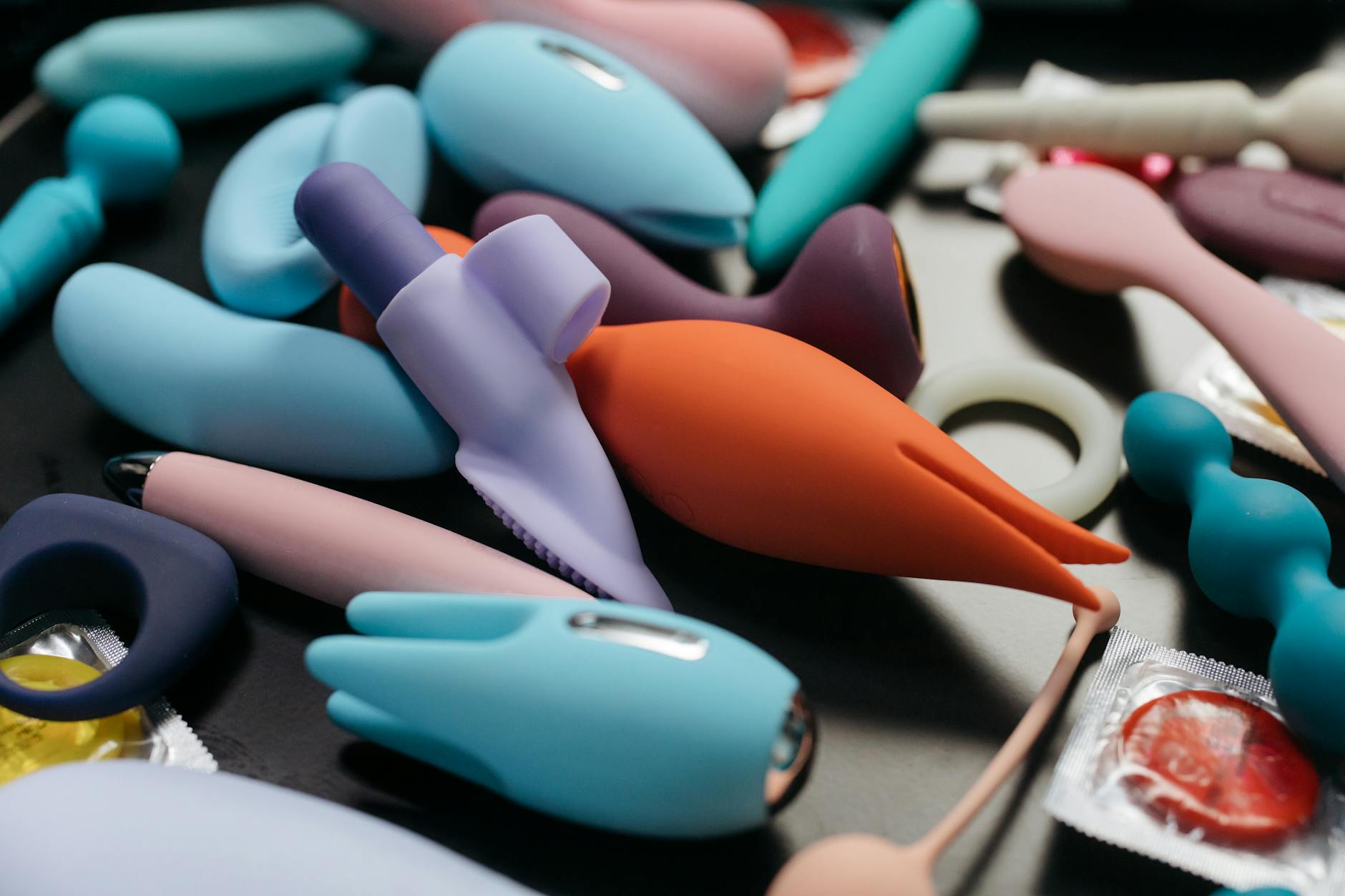
Photo by cottonbro studio on Pexels
Adjusting for specific postpartum challenges
If everything feels numb. Numbness often peaks around 2-4 weeks and gradually resolves by 12 weeks. If you're still experiencing significant numbness at 12 weeks, mention it to your doctor. In the meantime, using the Lem on patterns 2-3 (slightly higher intensity) can help recruit nerve endings that aren't responding to gentler stimulation. Don't go higher just to feel something. That's a trap. Patience works better than intensity.
If touch feels painful. Pain is a red flag. Stop immediately. This could indicate an infection, incomplete healing, or overstimulation. Check in with your OB. If your doctor rules out tissue trauma, try again in 2-4 weeks. Pain usually means you're not ready yet, and that's genuinely okay.
If you're hypersensitive. Hypersensitivity sometimes happens when tissue is still inflamed or when your nervous system is in high alert. Try the Lem on pattern 1 through two layers of fabric (underwear plus a thin cloth). Move it very slowly. Shorter sessions (3-5 minutes max) work better than longer ones. Hypersensitivity usually settles as healing progresses.
If breastfeeding is suppressing all desire. Prolactin is real and it's powerful. Some people find that pleasure returns immediately after weaning. Others find it returns while breastfeeding, but only at certain times. Demand feeding (especially cluster feeding) tends to tank desire more than scheduled feeding. If you can, try pleasure exploration during times when you've gone longest without nursing. Don't expect the desire to match what you felt before pregnancy. It might return stronger, or it might return gentler. Both are normal.
Bringing your partner into the process (or choosing not to)
Here's the thing about postpartum sexuality: it's deeply linked to whether you feel supported and seen in other parts of recovery. If your partner isn't sharing night wake-ups equally, or if they're not helping with household tasks, your brain won't feel safe enough for pleasure. Pleasure requires your nervous system to move from protect mode to play mode. You can't fake that shift.
Before you introduce the Lem with a partner present, make sure you've had a conversation about what you need. Not what they want to watch. What you need for your nervous system to feel safe. Maybe that's 2-3 nights of uninterrupted sleep. Maybe it's a conversation where they acknowledge how hard your body worked. Maybe it's concrete help with the baby.
Once you've established that foundation, you have options. Some people want their partner present during Lem exploration. Others want privacy for the first few weeks, then include their partner later. Some people discover they want solo pleasure exploration for months, and that's genuinely healthy. How to Introduce a Lemon Vibrator to a New Partner covers the conversation itself. The difference here is timing and the extra layer of postpartum vulnerability.
The mental piece: reclaiming your body as yours
Postpartum, your body belongs to your baby. Literally. You're feeding from it, being needed by it, touched constantly by it. Adding pleasure exploration is an act of reclaiming your body as a source of sensation for you, not just for someone else.
That reclamation matters psychologically. When you use the Lem postpartum, you're sending a message to your nervous system: this body is still mine. Pleasure still lives here. That's not selfish. It's foundational to long-term relationship health, your own well-being, and modeling that women's bodies are multi-purpose, not single-function.
Some people feel guilt about this. You worked so hard growing and birthing a baby. Shouldn't you just be grateful? Grateful and also deserving of pleasure aren't in conflict. You can be both.
When to expect sensation to return fully
Most postpartum sensation changes resolve within 3-6 months. Peak sensitivity usually returns around 4-6 months. Some people take longer. Some people discover that their pleasure responds differently than before, and they actually prefer it. Postpartum bodies sometimes feel sensation more intensely, not less. It's not always a loss. Sometimes it's a recalibration.
If sensation hasn't meaningfully improved by 6 months, check in with your OB. Persistent numbness or pain can indicate unhealed tissue or nerve damage, both of which are treatable but need professional evaluation. How to Use a Lemon Vibrator When Sensation Changes After Starting Birth Control covers hormonal sensation shifts, which often overlap with postpartum recovery if you're starting contraception during this window.
The bigger picture: pleasure as part of recovery
Postpartum sexuality isn't frivolous. It's part of your nervous system's return to baseline. It's part of bonding with a partner (if you have one). It's part of reclaiming your identity as a person with desires, not just a parent. A lemon vibrator is a tool for that reclamation, but only if you use it with patience and realistic expectations.
Your postpartum body deserves pleasure. Just not on anyone else's timeline but yours.
People also ask
How soon after birth can you use a vibrator?
Wait for full medical clearance from your OB, which is typically 6 weeks for vaginal delivery and 8 weeks for cesarean. Even then, I'd suggest waiting another 2-4 weeks before introducing a lemon vibrator, to give your nervous system and tissue time to heal more fully. Every postpartum body is different. Some people feel ready at 8 weeks. Others need 12-16 weeks. There's no penalty for waiting.
Does a Lem vibrator hurt after childbirth?
A well-designed clitoral suction vibrator like the Lem is gentler on postpartum tissue than traditional vibrators because it doesn't rely on friction. That said, if you're still swollen or dealing with scar tissue sensitivity, even gentle suction can feel uncomfortable. Start on pattern 1, use it through fabric, and keep sessions short. If pain persists beyond a few attempts, wait longer. Pain is information. Listen to it.
Can you use lemon vibrators while breastfeeding?
Yes. Some people find their desire is suppressed while breastfeeding due to high prolactin levels. Others don't experience that suppression. If you want to explore pleasure while nursing, try it during times when you've gone longest without feeding. You might also notice that desire returns gradually as you introduce solid foods and nursing frequency decreases. That's completely normal.
Do postpartum bodies have different orgasms?
Yes, often. Some people report weaker orgasms for a few months postpartum. Others report stronger, more localized sensations. Some experience multiorgasmic responses they didn't have before. Postpartum bodies are still healing and recalibrating neurologically. Your orgasm experience might match your pre-pregnancy baseline, or it might be entirely new. Both outcomes are normal and usually temporary.
When should you see a doctor about postpartum sexual pain?
If pain is sharp, localized, or doesn't improve after 2-3 weeks of waiting, contact your OB. Postpartum pain can indicate slow-healing tears, infection, or scar tissue that needs attention. Don't push through pain hoping it will resolve. Medical evaluation is important. Most postpartum pain is treatable quickly once identified.
Is it normal to not want sex after childbirth?
Completely normal. Prolactin, sleep deprivation, touch hunger from the baby, hormonal shifts, and the sheer physical exhaustion of early parenthood all combine to suppress sexual desire. This isn't a sign that something is wrong. It's a sign that your body and brain are prioritizing survival and caregiving. Desire usually returns over weeks to months. If it doesn't return by 6 months, mention it to your doctor. That's worth exploring together.
If you're navigating postpartum recovery and want to rebuild intimacy in a way that honors your healing, come talk to us. Contact Nancy's Lemons with questions about products, timelines, or strategies that might work for your specific situation.